Without CO₂, there would be no photosynthesis, no free oxygen, no food chains — and no us. CO₂ underpins every multicellular life form on Earth.

Joined May 2024
2,613 Photos and videos
Whether terrestrial forests or oceanic phytoplankton, the conversion of inorganic carbon into organic matter via photosynthesis remains the biological miracle for life on Earth. NASA satellites, primarily from the MODIS and AVHRR sensors, show many areas of our planet becoming visibly greener. Up to 70% of this greening is attributed to CO₂ fertilisation. Yet this was not the looming crisis the UN long prophesied. Instead, it’s a spectacular recovery driving higher food productivity. Desert margins are shrinking and parts of the Arctic are greening. Recent data from the NOAA Arctic Report Card confirms tundra greenness is at near-record highs. New studies have deepened our understanding of the benefits of higher CO₂ for global greening and farm productivity. Plants stay greener longer because elevated CO₂ lets them use water more efficiently. Since 1960, CO₂ has boosted photosynthesis in wheat by roughly 35% and soybeans by around 18%. CO₂ and chlorophyll are the fundamental building blocks of photosynthesis, sustaining virtually every food chain on the planet. They nourish phytoplankton and algae in the oceans, as well as all terrestrial plant life — forming the basis for all living things, including humanity. As the visualisation reminds us, this miracle isn't confined to land. Microscopic phytoplankton transforms sunlight and CO₂ into biomass, generating between 50% and 80% of the Earth's oxygen in the process. CO₂ is indirectly responsible for feeding every creature on Earth.
4
60
149
2,633
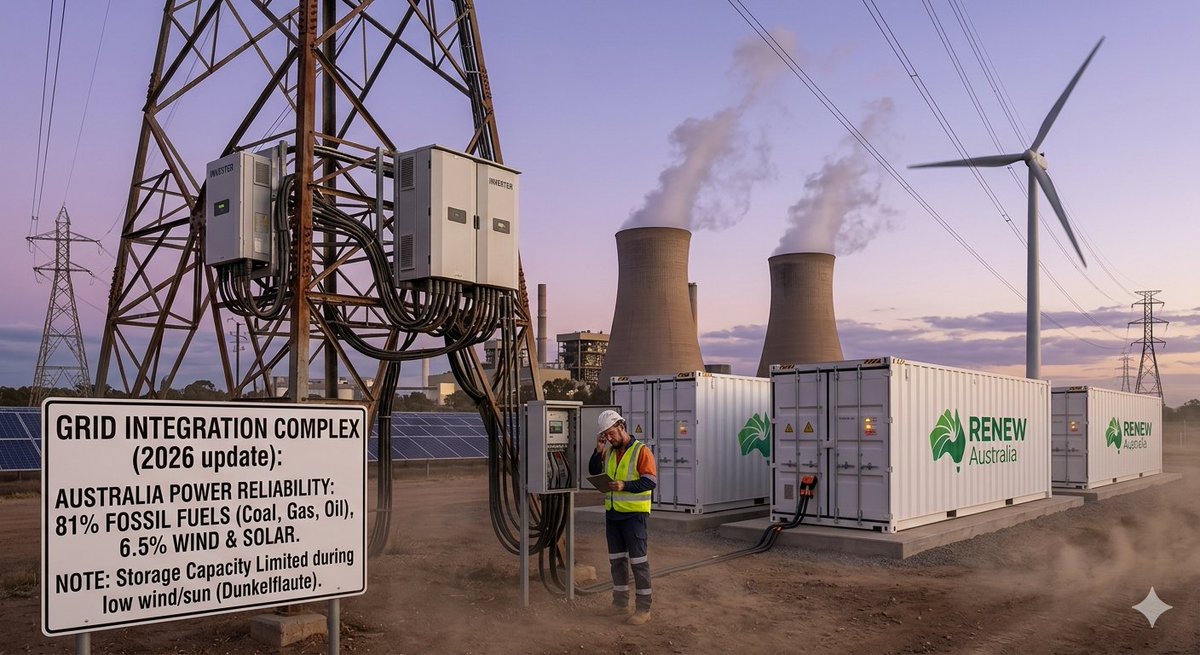
Western nations are growing poorer by the day, losing strategic industries and assets, shedding jobs and piling up unpayable debt. China’s coal-fired industrial juggernaut powers confidently onward. This policy failure of the West has delivered self-inflicted energy poverty, forced factory closures and deindustrialisation. No modern economy can survive electricity costing four to six times its main competitor. Entire sectors – steel, chemicals, fertilisers, refining, automotive – are collapsing or fleeing. This is all funding China's economic miracle. The West responded to the climate crisis ideology with intermittent, costly and unreliable wind and solar, as visualized in the idealised landscape shown in the image. These sources simply fail to deliver the essential baseload power needed to support manufacturing or heavy industry. Meanwhile, household and industrial electricity prices have marched relentlessly upward. We already have a global price tag forecast for net zero of $275 trillion by 2050, at $9.2 trillion a year (McKinsey Global, 2022). Western nations spent the last four decades systematically dismantling their reliable coal, oil and gas generation — and waging war on their own citizens. Ironically, traditional fuels continue to provide 81% of the world's primary energy — wind and solar around 6%. Since 2021, China has permitted or started more than 400 GW of new coal — almost 1½ times the entire electricity fleet of the EU. No Western nation can come close to matching Beijing’s cost structure for forging steel, refining aluminium, producing chemicals or mass-manufacturing batteries and EVs. This is delivering the cheapest, most reliable electricity on earth to China's factories. While the high electricity costs and industrial pressures in the West are real, the crisis runs deeper than a mere policy blunder—its a fundamental failure of national sovereignty. China is aggressively ramping up renewables — adding massive wind and solar capacity (exceeding 500 GW in 2025, including record solar installations); yet it still commissions significant new coal power plants (over 80 GW in 2025) to ensure grid stability. China got it right — we got it wrong.
17
118
260
4,122
Global oil production is heading for a massive shortfall as output from existing wells begins its expected decline, according to analysis by Rystad Energy. Daily global liquids production has hovered around or above 100 million barrels per day in recent years, but mature fields are on a steep decline curve. Without sufficient new infill drilling, developments and discoveries, this could create widening supply gaps in the coming decades — potentially having far more of an impact than temporary disruptions like Strait of Hormuz blockades. This underscores looming risks of tighter markets, higher fuel costs for diesel, petrol and oil derivatives, and pressures on road transport and internal combustion engine economies if investment lags. The graph illustrates a widening gap out to 2050 between natural well depletion and projected demand scenarios (High, Mean, Low). Driven by transport, petrochemicals and developing economies, this sustained demand underscores the need for new infill, development and discoveries to bridge the gap. The largest component — existing producing wells — will decline significantly over time. New supply from infill, under-development and fresh discoveries will be essential to bridge the gap, but recent trends show slower replacement rates amid shifting capital and policy signals. Data sourced from Rystad Energy and published by Bloomberg shows this is a reminder of the ongoing investment challenge required for energy abundance. It's not yet a call for panic, but for sensible policy supporting reliable supply alongside innovation. This oil deficit exposes the critical vulnerability in sole reliance on wind and solar, which remain unable to deliver the high-density baseload power needed to run heavy industry.
11
23
87
2,915
For forty years, we've been sold an all-inclusive talisman for a climate crisis — the 'global average temperature'. It isn't a direct measurement though — it's a constructed estimate, pieced together from fragments of patchy data and models. Yet this is driving net zero policies that could be history's costliest economic mistake. We lack ironclad proof that it's precise enough to justify upending energy systems worldwide. We can already see the unexpected benefits from higher CO₂ levels — the world is becoming greener and more robust (NASA data). It was never mentioned in the global warming agenda. This global temperature metric has fueled skyrocketing electricity bills across the West, hollowed out industries and transferred vast wealth from taxpayers to renewables interests and bureaucracies. Skeptics are marginalised. Goalposts keep shifting. How is 'global average temperature' even calculated? It's based on a patchwork of ground stations — many relocated over decades from rural fields to urban heat islands (airports, tarmac). Coverage is uneven: sparse pre-1950, especially over oceans (72% of Earth) and the Southern Hemisphere. Missing data gets 'infilled by algorithms. Raw readings are adjusted — homogenised, corrected for urban effects — via complex, sometimes opaque processes. Multiple datasets (NASA, NOAA, Hadley Centre, Berkeley Earth, Copernicus) use varying methods. They broadly agree on 1.4°C warming since pre-industrial (1850–1900), but diverge on details. We're told to fear catastrophe. Yet this rise may partly reflect natural recovery from the Little Ice Age — a cooler period with regional impacts. Over geological time (Phanerozoic, last 541M years), Earth's average often ranged much warmer (11–36°C in recent reconstructions), with thriving ecosystems long before humans. Our current 15°C interglacial is relatively cool by those standards. Natural variability (sun, oceans, orbits etc.) has always driven swings. What if we're overreacting to a metric with real limitations? Time for evidence-based abundance: resilient grids, nuclear, geothermal — not fear-driven central planning. Your thoughts? Is this data over dogma? @PeterDClack
45
236
551
8,437
The documented increase in global biomass isn't a snapshot after one rainy season. It's a measured, structural upward trend in persistent foliage over a quarter-century — even in arid-adapted scrub and woody vegetation ecosystems. NASA's satellite observations are correct. Yes, the greening includes vast areas of arid scrub that respond to temporary seasonal shifts. But long-term trend analysis from instruments like MODIS and VIIRS factors those out. This is decades of continuous, peer-reviewed data. The same principle applies to the oceans: their massive thermal and carbon regulation capacity is foundational marine science. Long-term, multi-decade datasets help us separate brief weather events from genuine structural planetary trends.
THIS IS DANGEROUSLY MISLEADING DISINFORMATION. Western Australia is not that Green. It’s a comparative temporary greening and mostly scrub. The oceans are not going to be able cleanse that much C02 dumping. Don’t believe this greenwashing people it’s got an agenda.
6
86
321
6,449
The summer heatwave gripping southern Europe right now is nothing new — it's an ancient, recurring weather pattern. Media coverage has largely failed to explain what's actually happening. This is a commonplace event with a long history. The classic name for these hot winds (and the associated air masses) blowing northward from the Sahara Desert across the Mediterranean into southern Europe is the Sirocco. It transports warm, dry — and often dusty — air from North Africa. As it crosses the sea, the air picks up moisture, arriving as humid, oppressive conditions over Italy, Spain, Malta, southern France and beyond. Sirocco winds can reach strong or even gale-force speeds. While most common in spring and autumn, they occur in summer too. Effects include Saharan dust outbreaks that can turn skies reddish, produce 'blood rain', spike temperatures, and create discomfort. These events are frequently accompanied by a broad African anticyclone (or 'African heat dome') — a large high-pressure system that pushes hot air northward, driving wider European heatwaves. Saharan dust outbreaks and the Saharan air layer often ride along, carrying fine particles far north and contributing to hazy skies. Far from unusual, these are well-known drivers of summer extremes in the region — as the attached Copernicus image clearly shows with the prominent dust plume streaming toward Italy and beyond.
87
855
2,068
37,039
Every cow on Earth is part of a closed CO₂ loop. Herbivores don’t create new carbon. They’re effectively CO₂ neutral. Cattle are nature’s great grazers — bulk feeders turning roughage into protein while keeping grasslands healthy. Without them, vast areas would atrophy into lifeless, nutrient-poor topsoil. The carbon a cow emits today was pulled from the air by the grass it ate just months earlier. It’s a rolling ledger: no net addition to the global system. Through photosynthesis, plants turn atmospheric CO₂ into carbohydrates. Cattle eat the grass, digest it, and return that same carbon to the atmosphere as CO₂ and CH₄. Nothing extra destabilises the system. Within roughly a decade, that methane oxidises back into CO₂ — ready for the next season’s grass to breathe in again. Cattle aren’t a new source of greenhouse gases. They’re recyclers in the biogenic carbon cycle.
90
1,099
2,174
24,202
Without CO₂, there would be no photosynthesis, no free oxygen, no food chains—and no us. CO₂'s life-sustaining treasures underpin every multicellular organism on Earth. It even provided the raw material for the iron and steel that built modern civilisation. The global warming campaign has too often ignored this majesty — focusing on fear while overlooking the greening planet NASA satellites have documented from space. Plants, algae, and ancient cyanobacteria capture sunlight to convert CO₂ and water into glucose, releasing oxygen as a byproduct. That simple reaction forms the carbon backbone of all life: every strand of DNA, every animal, every breath you take. Billions of years ago, vast mats of cyanobacteria in the primordial oceans produced so much oxygen it triggered the Great Oxidation Event. As oxygen dissolved iron in the seas, it formed the massive banded iron formations we still mine today for steel. CO₂ didn’t just enable life — it powered the entire food web and reshaped Earth’s atmosphere and geology. Without it, our planet would likely remain toxic and largely lifeless. This miracle unfolded in nature, without our interference. Shouldn’t we at least feel grateful for this astonishing blessings.
62
649
1,356
14,468
Today, NASA satellites confirm Earth is greening dramatically. CO₂ fertilisation has added biomass equivalent to two continents of new forest in recent decades, boosting crop yields and ecosystems alike. Oceans, holding around 50 times more carbon than the atmosphere, continue their ancient dance of absorption, circulation and outgassing under Henry’s Law. The natural world keeps working its wonders. The real question isn’t whether CO₂ is 'pollution', but how we pursue genuine abundance and resilience while staying humble before these vast systems.
211
2,360
6,447
170,936
Dismantling the world's power structure of coal, oil, and gas — at enormous cost — could be the costliest error of judgment in history. Despite decades of installing wind turbines and solar panels, intermittent renewables are still unable to equal the dense, reliable energy of hydrocarbons without backup. Replacing the world grid with intermittent power carries a nominal price tag of $178 trillion 'so far'; the total transition by 2050 will cost an estimated $275 trillion (McKinsey Global, 2022). No one appears to have thought through the colossal pitfalls lying a decade or so ahead. This building spree already suggests there will be waves of ongoing environmental degradation, as picturesque landscapes, coastal vistas, and farmland are hijacked for wind and solar 'farms' — leaving behind a legacy of industrial carnage. Crucially, coal was the primary driver of the Industrial Revolution in the 18th century, providing the intense heat needed to generate steam and power factories, trains, and ships during the icy depths of the Little Ice Age — a desperate era of cold and starvation. Today, there are still vast known and untapped reserves of coal, oil and gas: * Coal: 1.06 trillion tonnes (approx. 132 years remaining). * Gas: 7,299 trillion cubic feet (approx. 143 years remaining). * Oil: 1.65 trillion barrels (approx. 53 years remaining). An undiscovered world could contain two or three times as much, enough to last another three centuries. -@PeterDClack
46
375
827
10,204
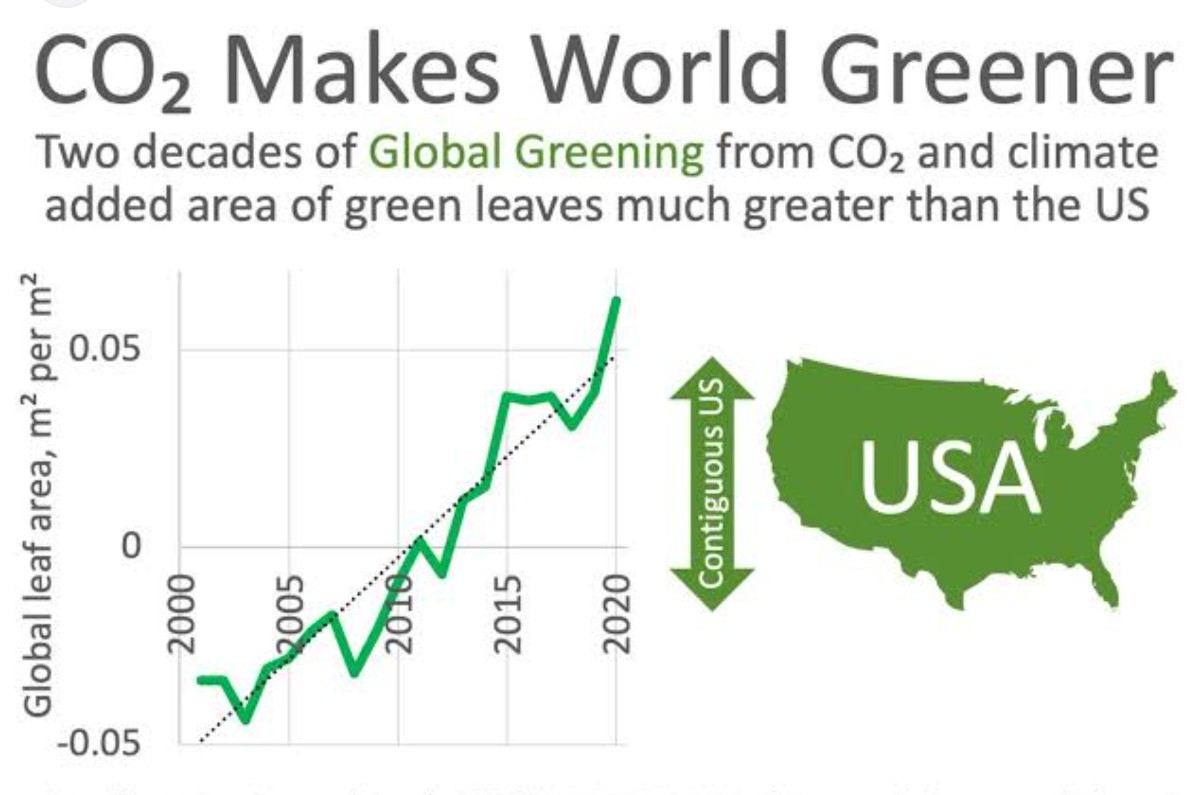
The world is more than 1°C warmer and CO₂ has reached 427 ppm — yet our planet is turning into a greener paradise. NASA data shows global greening from higher CO₂ has delivered an unexpected windfall: an increase in leaf area equivalent to the contiguous United States — or roughly the size of the entire Amazon Rainforest. The Sahel has reclaimed 8% of its dry barren lands and Arctic vegetation surged 38% between 1985 and 2016. Satellites detected significant greening across 25–50% of the world's vegetated areas (NASA/Boston University findings, 2000–2017). Food production has been substantially boosted. This is the Earth actively participating: 30% of these new green areas provide natural cooling through enhanced water-vapour management. The planet isn’t a passive victim — it’s an active, resilient participant. By comparison, UN climate ideology sells fear and control. This reality invites out renewed faith in the natural world. -@PeterDClack
91
1,005
2,270
24,841
Coal, oil and gas provide 81% of the world's primary power; wind and solar lags behind on just 6.5%. (1/2) This transition is in a lot of trouble. The price tag sits at around $147 trillions so far (McKinsey Global, 2022). Despite this massive outlay, wind and solar are still incapable of delivering baseload power. These estimates cover transport, heating and industrial activity, plus duplicating the global power grid and transforming how electricity is stored. This is as yet unsolved. Global primary energy consumption still relies heavily on retaining traditional hydrocarbon fuels. Wind and solar generally prove successful at a smaller scale. But they are not yet viable on a global scale without substantial involvement of hydrocarbon energy. According to recent data from the Energy Institute Statistical Review and the IEA, decades of government incentives, feed-in tariffs and tax credits have heavily underwritten the deployment of wind and solar. But the energy it produces is fundamentally incompatible with the existing world power grids. Once wealthy western nations have now subsidised two generations of wind and solar power, yet they fail to acknowledge the incompatibility of renewable power with existing grids. A new global grid has a price tag of $21 trillions. They have drastically underinvested in the infrastructure grid upgrades or battery storage that can handle the volatile, intermittent nature of renewable energy. Traditional grids rely on synchronous generation—large spinning turbines in coal, gas or hydro plants. These provide natural inertia to keep grid frequency stable. Wind and solar use inverter-based technology but they cannot provide this essential stability. It's a profound thermodynamics mismatch.
32
360
773
10,988
Building grid-scale battery systems capable of backing up a nation for times of low wind or sunlight (known as a Dunkelflaute) face massive physical constraints. (2/2) This specifically occurs in mining for lithium, cobalt and copper, plus the soaring production costs. You cannot mine the quartz, smelt the silicon, forge the steel or transport the massive blades of a wind turbine without high-density heat and power. This is only provided by coal, oil and gas. Because wind and solar are intermittent, they require rapid-start gas peaker plants or spinning coal reserves to idle in the background, ready to jump in the second the weather shifts. The grid struggles to handle this thermodynamic mismatch. The world needs to plug intermittent, weather-dependent sources into an industrial grid that demands absolute, second-by-second equilibrium. We have had more than a century to refine grid efficiency. Rebuilding the world's power grids to handle this incompatible energy isn't just difficult—it is a fresh financial black hole. According to the McKinsey Global Institute, achieving net zero will require $275 trillions in cumulative capital spending by 2050—a massive portion of which must be diverted just to overhaul and rebuild these incompatible power grids and storage systems. The renewable supply chain won't rescue us either. It's firmly anchored in the fossil fuel economy. After 40 years of guilt and more subsidies, amid fading political belief, fossil fuels still carry the cross of sustaining human civilisation. IMAGE: Aerial shot of an open-cut mine, which drives home the massive physical constraints of extraction.
21
132
317
4,821
International climate bureaucracies are retreating from their original worst-case scenarios. Their high-end 5-degree warnings from 20 years ago were used to drive public anxiety and justify massive overhauls to trusted energy systems. These are evaporating under the sheer weight of actual data. The fear narrative may be ending, but the biosphere is flourishing. NASA satellite data reveal that between 25% and 50% of Earth’s vegetated lands have shown significant greening over the last four decades. This is an expansion of biomass equivalent to twice the area of the continental United States—and CO₂ fertilisation is responsible for roughly 70% of it. The higher atmospheric CO₂ (hovering around 426 ppm) allows leaf pores (stomata) to stay open for less time to absorb carbon. This is nature’s built-in water saver, drastically cutting moisture loss and boosting natural drought resistance. As a result, vegetation is actively reclaiming arid fringes of the Sahel, the Middle East and the Australian Outback. Nature is using this extra airborne fuel to thrive in regions once deemed too barren. Nevertheless, climate bureaucrats are still fixated on economic modeling and their 2050 net zero bank balance target. The planet itself doesn't care. Yet it demonstrates the profound, biological benefits of elevated CO₂.
49
423
960
13,505
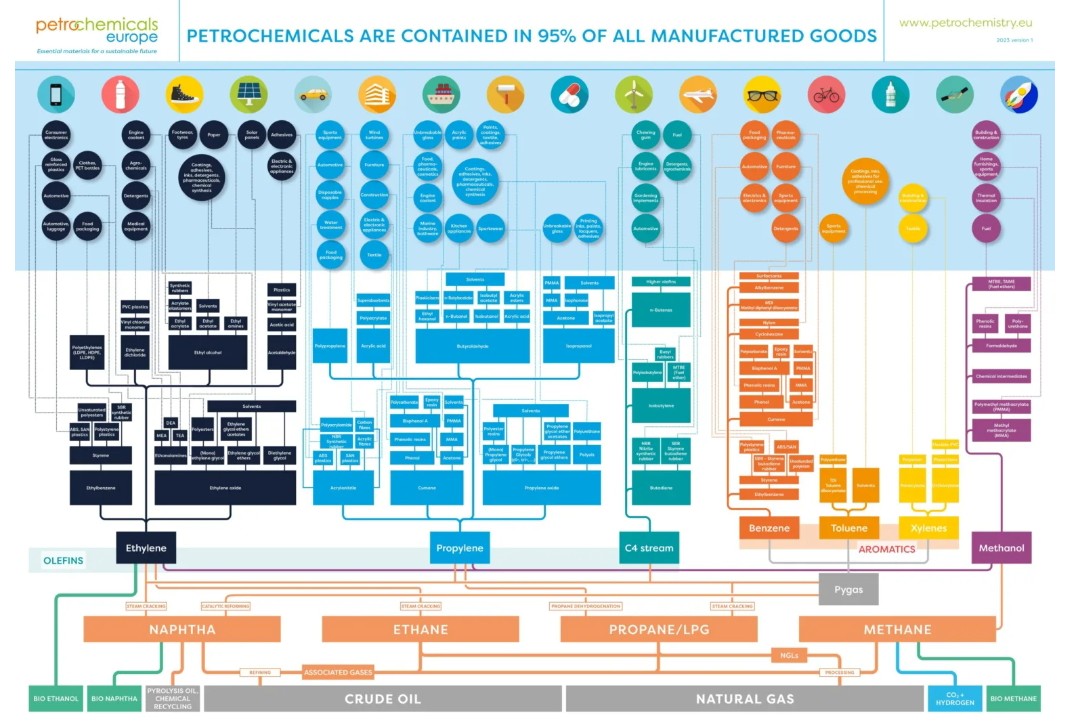
Take away the hydrocarbons, and we lose virtually overnight everything that makes us modern. The world relies almost entirely on hydrocarbon byproducts. It's an intricate, deeply woven symbiosis that cannot be replaced by simply stumping up a big battery—an industrial-scale solution that hasn't even been invented yet. Wind and solar cannot produce a single one of the thousands of derivatives that cascade from oil, honed by more than a century of invention and assimilation. Without these derivatives, the visible iconography of wind turbines and solar farms could not be built in the first place. They would be unable to darken our familiar landscapes with dystopian industrial grids. Global reliance on hydrocarbons affects the entire human production chain—from the extraction and processing of metals and rare earths to refining and manufacturing. Take bitumen, which rolled out the entire world's networks of roads and highways. Think about the heavy, diesel-powered machinery, maritime shipping and aviation fleets that move food and raw materials worldwide. They rely almost exclusively on hydrocarbons for both fuel and lubrication. Imagine a world without them. Modern medicine and healthcare are fundamentally built on hydrocarbon derivatives. High-grade medical equipment, sterile syringes, intravenous tubing, surgical gloves and the plastic casings for life-saving machinery - they are all manufactured from petrochemical resins. There is not a single sterile modern hospital in the entire world that could function without oil. The global food supply chain is equally linked to hydrocarbon extraction. The insulation on electrical wiring and the advanced polymers inside every television and smartphone ever built come from fossil fuel derivatives. Meanwhile, oil and natural gas remain the fundamental precursors to all industrial fertilisers and pesticides. Think of commonplace items like paints, synthetic fabrics like polyester and nylon, detergents, cosmetics, and pharmaceuticals. They all depend directly on hydrocarbons. A renewable energy culture will never replace the raw physical material that builds the roads, runs the hospitals, grows the food and makes our technology function. This deeply woven foundation is the essence of modern life.
27
283
650
8,636