Life’s Work is Catalyzing Innovation | ecosysmetacognition.substack… | Host of the Austin Next Podcast | Old handle @AustinNxPodcast

Joined September 2021
3,475 Photos and videos
Pinned Post
A custom circuit board that ran $2,000 and a 2-month wait five years ago now costs $15 and ships in 2 weeks. That collapse is why a 100 teenagers flew to Austin for @hackclub's hardware hackathon to build in the physical world instead of code in the digital. I spoke with Zach Latta (founder of Hack Club), Meghana Madiraju (the 17 year old organizer), & @lieberman_blake (the VC who help bring it here) on why now, why teens, and why here. Agenda 00:00 What Hack Club Stasis Is 06:28 How Hack Club actually works 13:01 Why hardware, why now 18:05 The case against the credential machine 24:11 Agency and the pressure myth 29:33 What's actually worth building 34:38 Open source is quietly closing
3
5
30
4,797
Jason Scharf reposted
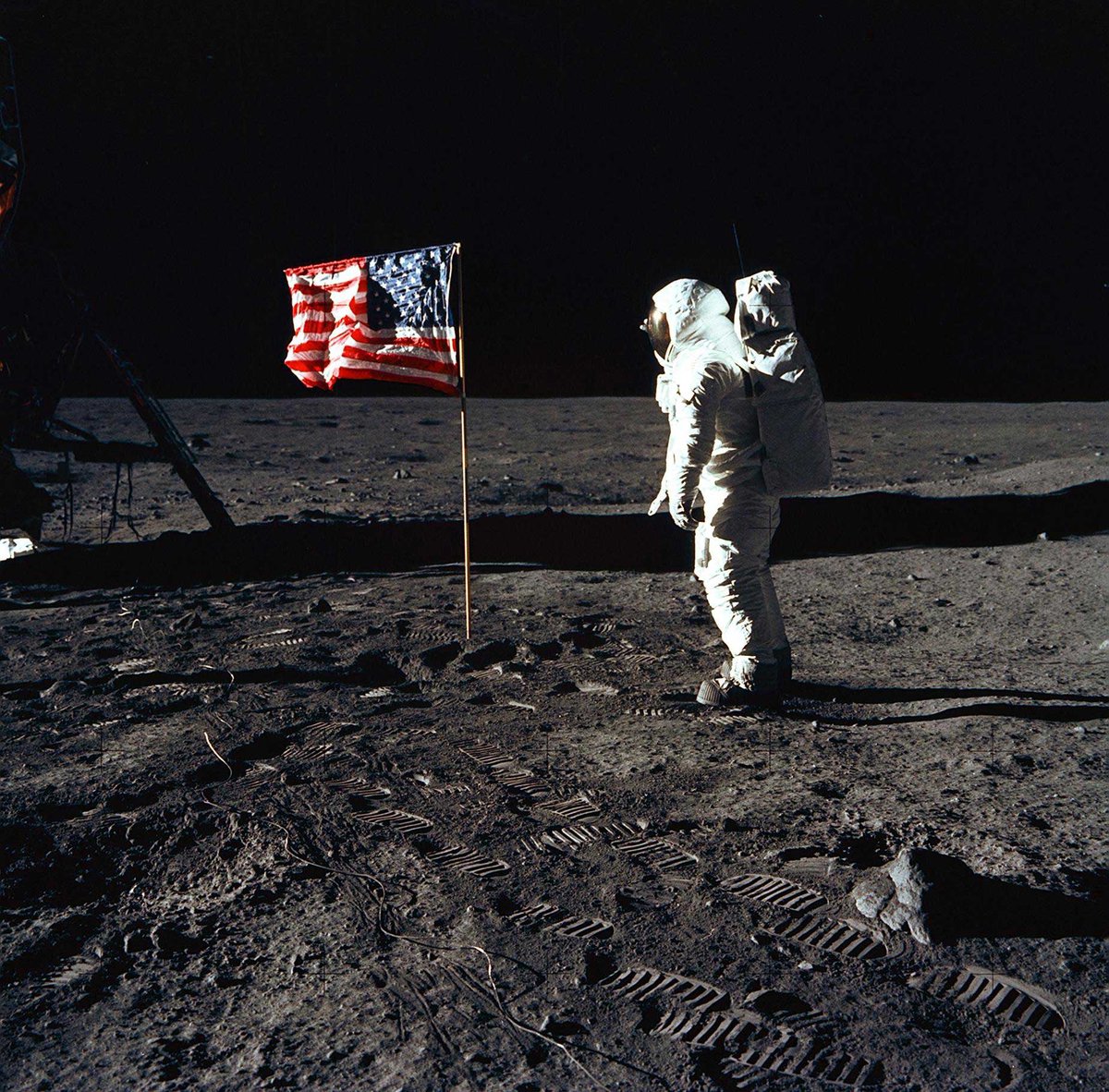
I’ve always found people who bristle at “American exceptionalism” kind of… weird. Not because I lack self-awareness — I’ve spent my career cataloging every way this country fails to live up to its own rules. But that’s exactly why I love it so damn much. We built a system designed to be shamed by its own founding documents, and it still delivered one of the most spectacular, world-altering runs in human history. A genuine force for human flourishing. I also found the argument against American exceptionalism to be historically illiterate. Here’s a sample of what we were first at: • The first large-scale democratic republic in human history — not a city-state, not a monarchy with a parliament bolted on, but a bold continental experiment in self-rule, popular sovereignty, and ordered liberty. • A written Constitution (1789) with separation of powers and checks & balances — still the oldest national constitution in force anywhere. • The Bill of Rights (1791): the first time a nation wrote “the government cannot touch these” into supreme law and actually meant it. A dare the world copied — from later rights charters to the Universal Declaration of Human Rights. • Public land-grant universities and mass higher education (Morrill Act), opening college to ordinary people no aristocracy would have let near the gates. (but don’t get me started about what happened after we started. Massively federally funding it.) • Kitty Hawk, 1903 — first controlled powered flight. • The Moon, 1969 — still the only ones who’ve been there. • The world’s largest economy since ~1890, powering unprecedented prosperity through grit and genius. • The assembly line, skyscraper, transistor, personal computer, ARPANET — the backbone of the modern world. • Telephone, phonograph, GPS — connecting and powering daily life. • Surgical anesthesia, polio vaccine — saving and transforming millions of lives. • Jazz, blues, rock ‘n’ roll — brand new American art forms that conquered the globe. • Hollywood’s dreams, blue jeans, bourbon, and a culture so open a kid like me could devour sushi, burritos, stuffed cabbage, and tabouli in the same week and rightfully think of it all as American. That’s the part that fills me with genuine love and pride: not just the power or the wins, but the appetite for freedom, creativity, and reinvention. The audacity to say “We the People” and keep trying to live up to it. What do you love most about this truly exceptional country? 🇺🇸
149
881
4,444
461,677
Jason Scharf reposted
Jason Scharf: Austin's present and future as Texas' tech hub open.substack.com/pub/razib/… Today Razib talks to Jason Scharf, a biotech investor and podcaster. A native of San Diego, Scharf is an angel investor and startup advisor focused on the intersection of biology, technology, and business, particularly within TechBio and digital health. He has leadership experience in strategy and market intelligence at major companies like Illumina and Amgen. Scharf now targets investments in the bio-innovation tech stack and care delivery transformation. Additionally, as the host of the Austin Next podcast, he is an advocate for regional innovation ecosystems. Scharf promotes the growth of the Texas Triangle as a premier global hub for biotechnology and frontier tech. Razib and Scharf discuss the growth and appeal of Austin, Texas, highlighting its booming tech scene and business environment. Scharf discusses why he moved from San Diego during the COVID-19 pandemic. They compare Austin’s population growth to other major cities, noting Austin’s rapid expansion from 400,000 in 1990 to over a million in 2020. They also talk about the impact of autonomous vehicles, the potential for high-speed rail, and the importance of infrastructure and talent in sustaining Austin’s future growth. The conversation touches on the broader Texas Triangle and its economic significance to the American economy today and in the future. They highlight the libertarian and business-friendly environment in Texas, allowing for significant developments like Tesla’s Gigafactory (the world’s second-largest building), and the planned Terfab. Razib compares Austin and San Antonio, noting the former’s rapid growth and the challenges it faces, such as infrastructure and housing. They also touch on the cultural and economic dynamics in Texas, emphasizing the importance of storytelling and narrative in shaping the state’s future.
1
4
29
13,979
Jason Scharf reposted
Flagging to listen to this later I'm often deeeep in the weeds on somewhat negative local politics stuff (though I do find humor in it). So I love to listen to Jason and be reminded, that Austin is awesome, lots of cool stuff are happening here and the future is bright 🚀
Jason Scharf: Austin's present and future as Texas' tech hub open.substack.com/pub/razib/… Today Razib talks to Jason Scharf, a biotech investor and podcaster. A native of San Diego, Scharf is an angel investor and startup advisor focused on the intersection of biology, technology, and business, particularly within TechBio and digital health. He has leadership experience in strategy and market intelligence at major companies like Illumina and Amgen. Scharf now targets investments in the bio-innovation tech stack and care delivery transformation. Additionally, as the host of the Austin Next podcast, he is an advocate for regional innovation ecosystems. Scharf promotes the growth of the Texas Triangle as a premier global hub for biotechnology and frontier tech. Razib and Scharf discuss the growth and appeal of Austin, Texas, highlighting its booming tech scene and business environment. Scharf discusses why he moved from San Diego during the COVID-19 pandemic. They compare Austin’s population growth to other major cities, noting Austin’s rapid expansion from 400,000 in 1990 to over a million in 2020. They also talk about the impact of autonomous vehicles, the potential for high-speed rail, and the importance of infrastructure and talent in sustaining Austin’s future growth. The conversation touches on the broader Texas Triangle and its economic significance to the American economy today and in the future. They highlight the libertarian and business-friendly environment in Texas, allowing for significant developments like Tesla’s Gigafactory (the world’s second-largest building), and the planned Terfab. Razib compares Austin and San Antonio, noting the former’s rapid growth and the challenges it faces, such as infrastructure and housing. They also touch on the cultural and economic dynamics in Texas, emphasizing the importance of storytelling and narrative in shaping the state’s future.
3
3
25
4,497
Jason Scharf reposted
Happy 250th America! I’m proud to be an American and am appreciative to all those who got us this far. 🇺🇸 Let’s protect this great country from those who strive to destroy it.
2
2
41
2,636
Jason Scharf reposted
Continental Congress HAS SIGNED A DECLARATION OF INDEPENDENCE!  The UNITED STATES are OFFICIALLY INDEPENDENT from BRITAIN. LIBERTY BELLS ring out throughout Philadelphia; the streets ERUPT IN ECSTASY.
547
10,960
69,176
2,755,500
Happy 250th Independence Day! 🇺🇸🇺🇸🇺🇸
12
224
This was a lot fun. I always love talking about Austin. Thanks @razibkhan for having me on.
Jason Scharf: Austin's present and future as Texas' tech hub open.substack.com/pub/razib/… Today Razib talks to Jason Scharf, a biotech investor and podcaster. A native of San Diego, Scharf is an angel investor and startup advisor focused on the intersection of biology, technology, and business, particularly within TechBio and digital health. He has leadership experience in strategy and market intelligence at major companies like Illumina and Amgen. Scharf now targets investments in the bio-innovation tech stack and care delivery transformation. Additionally, as the host of the Austin Next podcast, he is an advocate for regional innovation ecosystems. Scharf promotes the growth of the Texas Triangle as a premier global hub for biotechnology and frontier tech. Razib and Scharf discuss the growth and appeal of Austin, Texas, highlighting its booming tech scene and business environment. Scharf discusses why he moved from San Diego during the COVID-19 pandemic. They compare Austin’s population growth to other major cities, noting Austin’s rapid expansion from 400,000 in 1990 to over a million in 2020. They also talk about the impact of autonomous vehicles, the potential for high-speed rail, and the importance of infrastructure and talent in sustaining Austin’s future growth. The conversation touches on the broader Texas Triangle and its economic significance to the American economy today and in the future. They highlight the libertarian and business-friendly environment in Texas, allowing for significant developments like Tesla’s Gigafactory (the world’s second-largest building), and the planned Terfab. Razib compares Austin and San Antonio, noting the former’s rapid growth and the challenges it faces, such as infrastructure and housing. They also touch on the cultural and economic dynamics in Texas, emphasizing the importance of storytelling and narrative in shaping the state’s future.
1
6
2,285
Austin looks sweet from above. 🇺🇸
Two hundred and fifty years ago, a group of builders, innovators, and believers chose to pursue a future no one could guarantee. That same spirit of American ingenuity continues today. To mark our nation's moment, we've assembled a collection of 250 synthetic aperture radar (SAR) images, captured by our American-designed and American-built satellite constellation. From national parks and historic landmarks to critical infrastructure and coastlines, each image reflects both the places that define our country and the technology built to better understand it. This collection is also a tribute to the engineers, operators, and builders behind Umbra. Their relentless pursuit of what's possible has created a new way to see our world and a reminder that the next chapter of American innovation is still being written. 🇺🇸 Link to view the collection: umbra.space/america-250/
1
35
3,921
Turns out, you can build your way out of a housing problem. Austin is now 45th out of 100 for rent prices. (1 = most expensive. 100 = least expensive). Almost like supply and demand work, and failed schemes like rent control don’t.
Zumper released its national rent report on Monday, and Chicago *really* stands out. It's now tied with LA for the median price of a one-bedroom apartment, at $2200. Chicago had the second-highest y/y rent growth of all 100 cities they analyzed, trailing only AI-fueled SF.
2
20
1,774
🧬Austin Bio & Health Roundup. Tech and bio are rushing at hyperspeed toward each other, $1B in new venture dry powder, & the Texas Bio Triangle isn't stopping🧬 💭 My Thoughts The line between tech and bio is blurring fast. Tech companies are setting their sights on human health just as bio is becoming a more engineered discipline. Anthropic launched Claude Science, a research workbench that brings literature review, data analysis, code, figure generation, and scientific writing into one AI-native workflow for scientists. At the same time, Eli Lilly and NVIDIA are partnering on a $1B AI drug discovery lab. Lilly wants better drugs. NVIDIA wants deeper pharma capabilities. The question is no longer only, “did we discover a new pathway?” It is becoming, “what is our data engine, and where is the moat?” David Ricks, CEO of Eli Lilly, draws a battle line around Lilly’s data moat: “We have a data advantage, because most of the tech-bio companies that you talk to, even some of the scale players, they’re just training on public data, but there’s only 4,000 ever approved drugs. Lilly alone has more than 3 million failed drugs.” If new technologies can takes us from 50 approved drugs a year to 500, the blockbuster model starts to break. GLP-1-scale markets will still exist, but the next wave looks more precise, more complex, and frankly just different. We start asking real questions about prevention, longevity, and what health can look like when invention is no longer the only bottleneck. This wave creates 1,000X improvements which do not fit cleanly into today’s business models. The value center moves from the standard Bio & Health assets alone to the tech and care stacks. The Bio Innovation Tech Stack is the tools, data, infrastructure, and workflows that build and catalyze revolutionary drugs, devices, and diagnostics. The Business of Health is the care models, payment models, adoption paths, consumer experiences, and scaling mechanisms that move invention into the real world. Austin is well positioned for this wave because the companies being built here already sit at this convergence. 💰 Funding & Capital Signals @8vc closed Fund 7 with $1.5B to back the U.S.-led AI industrial revolution, including healthcare, defense, manufacturing, and productivity. Given 8VC’s growing position in Austin, I expect more of that capital to find its way here and into Bio & Health. 🤠 Texas Bio Triangle Dallas: @colossal partnered with the U.S. Fish and Wildlife Service to create BioVault, a cryogenic library for endangered species cells, reproductive tissues, and genomic DNA. What’s Next? 🤠🚀🦾🧬
1
1
2
595
What today feels like 🇺🇸
4
21
917
Let’s go ⚛️
Tomorrow is a big day for Aalo, and the future of clean energy on Earth.
11
766
Did not expect Austin to dominate this much in the Texas semiconductor grants. The infrastructure layer of the stack (energy, chips, & data centers) is being built here. 🤠🚀🦾
Move over major Texas metros, the might of Austin's economy is highlighted in this report. bizjournals.com/austin/news/…
1
20
3,783
"You don't have to have the skills coming in. You have to have the curiosity and maybe the emotional intelligence to ask questions. The humility to learn things and be okay trying things and failing." - @lieberman_blake x.com/Jason_A_Scharf/status/…
A custom circuit board that ran $2,000 and a 2-month wait five years ago now costs $15 and ships in 2 weeks. That collapse is why a 100 teenagers flew to Austin for @hackclub's hardware hackathon to build in the physical world instead of code in the digital. I spoke with Zach Latta (founder of Hack Club), Meghana Madiraju (the 17 year old organizer), & @lieberman_blake (the VC who help bring it here) on why now, why teens, and why here. Agenda 00:00 What Hack Club Stasis Is 06:28 How Hack Club actually works 13:01 Why hardware, why now 18:05 The case against the credential machine 24:11 Agency and the pressure myth 29:33 What's actually worth building 34:38 Open source is quietly closing
3
512
🇺🇸🇺🇸🇺🇸 We are going to win this whole thing!
5
208
Jason Scharf reposted
What changed that allowed for a teen hardware hackathon to even be possible? x.com/Jason_A_Scharf/status/…
A custom circuit board that ran $2,000 and a 2-month wait five years ago now costs $15 and ships in 2 weeks. That collapse is why a 100 teenagers flew to Austin for @hackclub's hardware hackathon to build in the physical world instead of code in the digital. I spoke with Zach Latta (founder of Hack Club), Meghana Madiraju (the 17 year old organizer), & @lieberman_blake (the VC who help bring it here) on why now, why teens, and why here. Agenda 00:00 What Hack Club Stasis Is 06:28 How Hack Club actually works 13:01 Why hardware, why now 18:05 The case against the credential machine 24:11 Agency and the pressure myth 29:33 What's actually worth building 34:38 Open source is quietly closing
1
1
7
1,059