Joined May 2022
258 Photos and videos
Pinned Post
Things You Can Do to Be More Respectful of Lagos State Indigenes and Their Culture By following these steps, you can enjoy your Nigerian privilege in Lagos peacefully without trampling on the rights of the natives. 1. Understand that being a Lagos State indigene means different things to different people. Some identify primarily as Awori, the earliest settlers. Others belong to the Egun in Badagry, the Eko (a melting pot of Saros, Aguda, Tapa, and Benin influences) in Lagos Island, or the Ijebu in parts of Epe and Ikorodu. While Lagos is diverse, its indigenous people must be recognized and respected. 2. Find out whose land you are on and honor it. Every part of Lagos State has its indigenous people—whether the Awori, the Egun in Badagry, or the Eko in Lagos Island. Recognizing these roots is key to truly understanding Lagos beyond its modern identity. 3. Never ask anyone if they are a “true Lagosian.” Lagos has always been a city of migration, but its indigenous people should not have to prove their authenticity. Many Lagosians can trace their ancestry back generations, and their lineage is often more complex than outsiders assume. 4. Do not lightly claim that you have Awori, Egun, Eko, or Ijebu heritage. Lagos welcomes all, but being a Lagos indigene is different from simply being born or living in Lagos. Saying “My great-grandfather lived on Lagos Island” does not automatically make one indigenous. Honor the distinction. 5. Avoid saying things that diminish or erase indigenous Lagos culture. Phrases like “Eko for show” or the assumption that Lagosians are just “hustlers” overlook the deep traditions of the Awori, Egun, Eko, Ijebu, and other native groups. Lagos is more than just business—it has a cultural soul. 6. Don’t “play Lagos indigene.” Lagos culture is not entertainment for outsiders. Wearing Aso Oke as a costume, using Yoruba slang for clout, or engaging in selective “heritage tourism” without respecting the real people behind the traditions is exploitative. 7. Be where the people are. Visit historical Awori, Ijebu, Eko, and Egun settlements, support local cultural centers, and engage with Eyo festivals, Oro traditions, and heritage sites like the Badagry Slave Route, the Brazilian Quarter, and Iga Idunganran, which reflects Benin influence in its early monarchy. 8. Support Lagos indigene businesses by buying from indigenous artisans. From beadwork to fabric weaving, Awori, Egun, Eko, and Ijebu craftsmen have traditions that deserve to be preserved. Choose authentic Lagos State indigene products over mass-produced imitations. 9. Invite an elder or traditional leader to open major events with prayers or blessings. If hosting an event in Lagos State, acknowledge the Awori, Egun, Eko, or Ijebu communities whose land you are on. Research first and provide appropriate honorariums to show respect. Visit the palaces (Obas) for additional guidance. 10. Understand that Lagos State is diverse. Indigenous Lagosians are not just Awori—there are Egun, Eko, Ijebu, and other groups with distinct traditions and customs. Recognize their differences instead of treating them as the same. 11. Don’t assume all Lagos State indigenes are wealthy because of commerce. While Lagos is a financial hub, many indigenous communities have been displaced by development projects, migration, and pressure to accommodate new residents. Lagos State indigenes have faced land seizures, economic shifts, and struggles that are often overlooked. 12. When recognizing people, do not exclude Lagos State indigenes. Indigenous Lagosians are often left out of conversations about Lagos’ success. Acknowledge them when discussing the city’s history, economy, and contributions. 13. Don’t expect every cultural custom to be explained to you. At a traditional event? Observe and respect rather than demand explanations. Some practices are sacred and not meant to be overly dissected or commercialized. 14. If you’re at an event, be thoughtful about time. Traditional gatherings may not run on rigid schedules. Many prioritize relationships, storytelling, and community over strict timing. Respect the flow instead of imposing external expectations. 15 Be sensitive during mealtimes. In many Lagos (Yoruba) traditions, elders eat first, and younger or able-bodied people serve them. Be mindful at cultural events and do not rush to the food line without observing the customs. 16. Don’t call traditional outfits “costumes.” Whether it’s Aso Oke, Fila, Dansiki, ceremonial attire, kareta, or Egungun regalia worn by Lagos State indigenes, traditional clothing holds deep cultural and personal significance. Many garments are family heirlooms or handmade with care. 17. Do not assume Lagosians have high rates of social vices. Stereotypes about Lagosians—whether about wealth, land selling, crime, or lifestyle—are misleading. The history of Lagos State indigenes is far richer than media portrayals often suggest. Even outlets like @ARISEtv don’t fully grasp this history. 18. Do not tokenize people. Lagos indigenes should not be included in conversations just for the sake of “diversity.” Build genuine relationships with the communities rather than using them for optics. 19. Ensure the voices of Lagos Indigenes are amplified. If Lagos’ history is being discussed, Awori, Egun, Eko, Ijebu, and other indigenous voices should lead the conversation—not outsiders writing their stories for them. 20. Don’t bring up migration theories that erase indigenous identity. Some narratives suggest that all Lagosians are settlers from elsewhere, ignoring the deep history of Awori, Egun, Eko, Ijebu, and other native peoples. Recognize their rightful presence. 21. Check your Nigerian privilege if you are not indigenous to Lagos. Just because Lagos is welcoming does not mean non-indigenes should feel entitled to its land, politics, culture, or opportunities without respecting the people who have always been here. 22. Use the present tense when talking about indigenous Lagosians. Many people speak of Lagos indigenes as if they only existed in the past. But indigenes are still here—preserving traditions, shaping modern Lagos, and influencing its future. By Prince Gbenga Ajiboye from the Ikudigbaro Royal Family, Ete Kingdom, Lagos, Nigeria. and Prince Adeniyi Baruwa from Aromire, Oluwa and Akinsemoyin Royals houses, Lagos, Nigeria
13
80
139
18,051
The Architecture of Erasure: Street Names, Museums, and Royal Gaslighting The marginalization of the Awori is not just political; it is visual, cultural, and deeply psychological. One only needs to walk the streets of modern Lagos to witness the architecture of erasure at work. In any sovereign society, the physical landscape honors its aboriginal founders. Yet, in Lagos State today, the street names, monuments, and public squares are overwhelmingly dedicated to British colonizers, Saro/Aguda returnees, and Egba or Ijebu politicians. Where are the grand boulevards named after Olofin Ogunfunminire? Where are the national monuments honoring Queen Ajaye’s defense of Iddo Island? Where are the statues of Chief Amodu Tijani, who defeated the British Empire? They are conspicuously absent, replaced by the names of the very settlers who usurped Awori wealth. This cultural gaslighting extends to the state-sponsored curation of history. One only needs to visit the National Museum at Onikan, Lagos, to witness this disparity. While the museum is funded by the taxes of the indigenous Awori and other residents, its prominent historical exhibitions and galleries dedicate sweeping attention to the grandeur of the Benin Kingdom, showcasing royal Bini bronzes, regalia, and the narrative of the Oba dynasty. Conversely, the primordial Awori civilization is routinely reduced to a mere footnote. There is no dedicated state museum or primary exhibition in Lagos that comprehensively centers the "Knowledge Capital" of Olofin Ogunfunminire, the ritual of the sinking Awo, or the specific history of the Idejo landowners. By curating the physical artifacts of the state to project the glory of the Benin Kingdom, the state deliberately reinforces the fabricated narrative that Lagos was a subordinate extension of Benin. The indigenous Awori are forced to subsidize their own historical erasure with their own tax naira. This psychological warfare is frequently validated by the highest levels of the modern political class. A glaring example is the highly publicized, modern-day visits of the Oba of Benin to the Governor of Lagos State, such as his visit to Governor Babajide Sanwo-Olu . These events are not mere courtesy calls; they are carefully orchestrated political theater. They serve to publicly validate the Benin conquest myth, allowing the state government (representing the settler political class) to project an image of Lagos as a formerly Benin-owned territory. By bowing to the Benin monarch on Awori soil, while simultaneously ignoring the aboriginal Idejo landlords, the political elite actively perpetuate the gaslighting. But history has a way of outliving its revisionists. The historic unveiling of the new Olofin Palace and the Awori Museum in Isheri Olofin—under the sovereign leadership of His Royal Majesty, Oba Adekunle Bamgbade, the Olofin of Isheri Kingdom—is a physical, undeniable reclamation of our sovereignty Let the chronological record be stated with absolute precision. While the formal, ancestral Memorandum of Understanding (MOU) conservatively codifies the settlement of Isheri Olofin to 1425 AD, authentic historical, genealogical, and archaeological investigations reveal that our civilization runs far deeper. The true, classical ethnogenesis of the Awori, established by our progenitor Ogunfunminire Olofin, dates back to the 10th and 11th centuries—directly aligning with the golden Yoruba classical age of Ile-Ife. This means the Awori were cultivating, fishing, and governing the coastal lagoons of Lagos for nearly half a millennium before any foreign empire or colonial power attempted to assert authority over the Bight of Benin. We must now ask the uncomfortable questions: 1. Why must the indigenous Awori people build their own private palaces and museums to protect their ancestors, while the state government uses public funds to finance the cultural exhibitions of our neighbors? 2. Why do the street names of Lagos systematically ignore the Idejo and the hunter-pathfinders who developed this land, while honoring those who sought to marginalize us? 3. How can a state achieve metropolitan expansion while treating its aboriginal hosts as invisible? The physical landscape of Lagos must begin to reflect its true, indigenous history. The new Olofin Palace at Isheri is the line drawn in the sand. It is the visual proof that the Awori were here first, we are still here, and under both traditional and international law, we cannot—and will not—be replaced. The time for quiet endurance is over. Let the conversation about repairs, regulations, and the restoration of Awori inheritance finally begin. Grab a copy of my new book, The Lagos Deception on Amazon and learn about our history. a.co/d/0gfw9B6D Signed, Baba Awori
1
4
106
LIACO 2nd Annual Convention 2026 is LIVE! JOIN US TODAY SATURDAY JUNE 27th 2026 AT ISLAND CLUB, ONIKAN, LAGOS. Lagos indigenes, leaders, professionals, youth, and change-makers — we are gathering TODAY to shape the future of our land. Theme: *TIME TO GET IT RIGHT*
1
5
7
169
A CALL TO JUSTICE AND UNITY: PREVENTING AN ETI-OSA SCENARIO IN ALIMOSHO To All Stakeholders, Progressives, and Well-Meaning Yoruba Patriots, @officialABAT The strength of any family, community, or political movement lies in justice. Where there is no justice, unity cannot stand. The recent decision to withdraw the APC House of Representatives ticket from Honourable Ganiyu Ayuba—the candidate who clearly and democratically won the Alimosho Federal Constituency primary—and hand it to an imposed candidate is a direct threat to the peace, stability, and political future of our constituency. Lagos is Not a "No Man's Land": We the Awori Are Here This is precisely the kind of systemic injustice we have always argued against. For too long, some political actors have behaved as though Lagos is a "no man's land" where indigenous rights and local roots can be completely ignored. We, the Awori, are here. We are the native custodians of this territory, and we deserve the right to represent our own land. We will not stand by and watch the political representation and resources of Alimosho being carted away to Ogun State. Representation in Alimosho must belong to the people of Alimosho. The Warning of Eti-Osa is Fresh We must not forget what happened in Eti-Osa. When internal party democracy was ignored, when local choices were sidelined, and when the wishes of the people were disregarded, the party’s base fractured. The result was a historic defeat, handing a vital seat to the opposition Attah!. Alimosho, the most populous local government in Lagos, is on the verge of walking down this same dangerous path. Sidelining an indigenous Awori winner in his own ancestral home will alienate voters, divide our ranks, and open the door for an opposition victory. A Call to All Yorubas Who Value Unity True Yoruba unity is not built on submission to unfairness. It is built on the ancient values of Omoluabi—fairness, honor, and respecting agreements. We appeal to every Yoruba son and daughter, both indigenes and residents alike, who desire the progress and stability of Lagos: Unity requires justice: We cannot demand a united front while systematically stripping our own people of their hard-earned mandates. Respect local representation: Allowing the native Awori people of Alimosho to be represented by their chosen son is a matter of equity, not division. Protect the ballot: If a candidate wins a free and fair primary, that victory must be sacrosanct. Our Demand We urge the leadership of the All Progressives Congress (APC) at all levels to act swiftly to prevent an avoidable electoral disaster. We demand the immediate reinstatement of Honourable Ganiyu Ayuba as the rightful candidate for the Alimosho Federal Constituency. Let us stand together, speak with one voice, and ensure that justice prevails. Only through fairness can we preserve the peace and secure our collective political future. Signed: Baba Awori
5
6
13
468
Lagosians, the time is NOW! We are exactly 6 days away from the most anticipated gathering of Lagos indigenes. The official jingle for the LIACO 2nd Annual Convention 2026 has been released. Watch it, feel the energy, and share it with every Lagosian in your network! Let us show the world our strength, our unity, and our determination to get it right. 📌 EVENT DETAILS: • Theme: "Time to Get It Right: Empowering Lagos Indigenes in State Politics and Economic Development" • Date: Saturday, June 27th, 2026 • Time: 10:00 AM Prompt • Venue: The Prestigious Island Club, Onikan, Lagos 🔥 SPECIAL GUESTS & KEYNOTE SPEAKERS: • His Excellency, Governor Babajide Sanwo-Olu (Governor of Lagos State) • Honorable Babatunde Raji Fashola (Ex-Governor of Lagos State) • Professor Abeeb Sani • Alhaji Aliko Dangote ...and other distinguished guest speakers. This convention is where we lay down our historic legislative bills for land protection, chieftaincy sanctity, and indigenous development. We cannot afford to falter at the finish line. 👉 HOW YOU CAN HELP TODAY: 1. SHARE THIS VIDEO: Post it on your WhatsApp status, Facebook, Instagram, and send it to your groups. 2. SUPPORT FINANCIALLY: We are in our final fundraising stretch to cover our remaining event deficit. Your contribution today ensures a successful, dignified event. 🏦 Bank: Carbon 📝 Account Name: Lagos Indigenes Development Initiative LIACO 🔢 Account Number: 6009146226 *(Reference: "FESTIVAL". Please share your proof of payment on this platform).* Let’s come together to protect our heritage and chart a sustainable future. See you at the Island Club on June 27th! Follow us on all social media: @liacoofficial LIACO... United for Lagos, Stronger Together! ✊🏾 Signed: Baba Awori
1
290
The Commissioner of Works in Lagos State, @tokunbo_wahab, is about the most effective. The delivery of his services is comparable to global standards. I do not say this from a myopic angle; I have seen behind the scenes of waste management in bigger cities like Houston and Denver. He is comparable to those standards given how Lagos State is. Those of us who are indigenous to the land have high confidence in him and would like to see him take more consequential responsibilities in Lagos State. If you don’t have global work experience, please stay out of this conversation even if your name is @GRVlagos. This is beyond politics. Signed: Engineer Baba Awori.
193
133
596
41,605
Prisoner or not, the only place a convicted person belongs is inside prison — whether they are transferred or swapped. Once these people from the Ethiopia deal land in Nigeria, they should serve the rest of their time in proper prisons in their villages or home states. No need to bring them to Lagos State or big cities. If Nigeria was serious about law and order, we would see clearly that not everybody belongs on the street. Some people who should be locked up are instead free, and in Lagos State, this people are even disturbing us on our ancestral land. Enough is enough
109
THE CONSTITUTION THAT FUELS INVASION & BLOODSHED IN NIGERIA Nigeria has NEVER been truly united. Some groups have been turned into sacrificial lambs — giving up their land, peace and lives so others could expand. This is not unity. It’s an expansionist mindset vs the indigenous mindset. Indigenes are peaceful, unsuspecting and accommodating. Expansionists think of ONLY ONE thing: THE LAND. FREEDOM OF MOVEMENT = OPEN BORDERS FOR BANDITS? The 1999 Constitution (as amended) explicitly enables this: Section 41(1): “Every citizen of Nigeria is entitled to move freely throughout Nigeria and to reside in any part thereof…” Section 43: “…every citizen of Nigeria shall have the right to acquire and own immovable property anywhere in Nigeria.” No guardrails. Bandits now move freely with weapons. Fake-product makers flood our markets. Peaceful indigenes pay with blood. THE ARCHITECTS WHO BUILT THIS TRAP The foundation of this Constitution was laid on 15 January 1966 by the Igbo-led coup. It was then built upon by Fulani forces after the July 1966 reprisal. Igbos and Fulanis were its principal architects. That is why, if you are a peaceful indigenous people, you will NEVER see yourself reflected in it. It was never written for you. SELF-DEFENCE FOR US, AK-47s FOR THEM The Constitution speaks of “rights,” yet gives ordinary indigenes sticks for self-defence. Meanwhile Fulanis and bandits roam with AK-47s and machetes. Whether I am kidnapped, neck sliced with a knife, or my organs slowly disintegrate from fake products — death is death. None of it is acceptable. THE ONLY WAY FORWARD: INDIGENOUS GOVERNANCE NOW If the National Assembly does not immediately allow each indigenous nation to govern its own ancestral land and arm itself for self-defence while modalities of peaceful divisibility are worked out, these terrorist will soon face the Villa and send the legislative arms packing. I have advocated indigenous governance for years. The time for truth and action is NOW. No more sacrifices. No more blood. Signed: Baba Awori
1
2
201
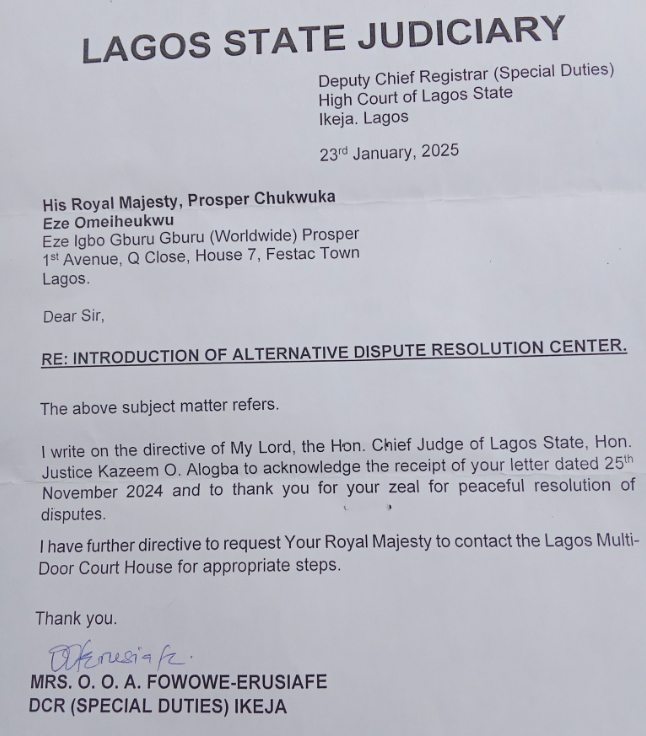
To the Lagos State Government @jidesanwoolu and the Alamuwo of Amuwo: Laws Without Enforcement Are Just Suggestions What is the absolute point of having a state government or recognized traditional institutions if they refuse to enforce their own laws and protect their domains? Despite the Lagos State Government publicly clarifying the law regarding traditional institutions and illegal titles, the individual at 1st Ave, Q Close, House 7, Festac Town continues to boldly parade himself as a "King" with zero consequences. We have the videos of him openly mocking the system, yet the state remains quiet when it comes to actual enforcement. @LagosPoliceNG More importantly, where is HRM Oba Oluwatoyin Obasola Adewusi Tayo, the Alamuwo of Amuwo & Festac Town? How can an officially recognized Awori Oba sit by in silence while a rogue individual sets up a parallel "palace" and parades an illegal title right in his own backyard in Festac Town? This is a complete slap in the face to the host community. The Awori people are being pushed to the wall by this blatant disrespect of their traditional heritage. If the Awori decide they have had enough and take matters into their own hands to protect their land and customs, the media and the state will be the first to quickly brand them as "unpeaceful." But what else are they supposed to do when the state government and the local traditional leaders turn a blind eye to this mess? A press release or a tweet clarifying the law is useless if the perpetrator is still sitting comfortably in Festac. This man's open defiance of Lagos State law warrants immediate arrest for impersonation, not a free pass to run a shadow monarchy. I am calling on all Aworis, Yorubas, and well-meaning Lagosians to wake up. I call on the Alamuwo of Amuwo & Festac Town, the Amuwo-Odofin Local Government, and the Lagos State security apparatus to do their jobs. We cannot allow our laws and traditional institutions to be trampled upon. Enforce the law, or admit you have lost control of your own state and your own communities. Signed; Baba Awori
30
157
292
16,935
To all proud Yoruba Sons and Daughters at home and abroad, As our elders say, "Bí a bá wo ojú ọ̀run, a ó rí àmì òjò" (When you look up at the heavens, you can already see the clear sign of the coming rain). The clouds are gathering, and to the wise, pay attention. The sign is already on the way. A wise man does not wait for the storm to hit before securing his roof; he prepares the moment he sees the signs. Because of this, I am giving my full, unreserved endorsement to the ÌRÙ ẸKÙN SECURITY NETWORK. Under the bold leadership and inspiration of Chief Dr. Sunday Adeyemo Igboho Ooṣa, this network has been established to promote peace, safety, vigilance, and unity across our beloved Yorubaland. I want to make a special, urgent call to our people in Lagos State. To the true indigenes of Lagos State (Èkó Akéte, ilẹ̀ ọgbọ́n)—the time to engage is now. We cannot afford to sit back and watch. We need brave Lagosians to step forward, join this outfit, and be posted right back to secure our communities in Lagos. This is a call to serve humanity with courage, honour, and discipline. Protecting our lives, properties, and cultural heritage is in our own hands. Why you should join today: ✅ The Form is entirely FREE OF CHARGE. ✅ Applicants must be true Yoruba indigenes. ✅ You will be posted directly to your respective state to protect your own people. Let us not wait for the rain to beat us. Let us be the shield that protects our land. Awa Dafara, Awa Dabo, Awa Wa Lẹ́ fún Ilú Wa! Awa ni Aláàbò ilẹ̀ wa, Ìrù Ẹkùn: Agbara Yoruba, Ààbò Yoruba. Signed, Baba Awori
2
2
5
134
The Blood of Oyedokun and the Tears of Ogbomoso: How Do Our Leaders Sleep While Yorubaland Bleeds? If there is any conscience left in the political leadership of Yorubaland, the events of these past few days should permanently destroy their ability to sleep. Within a matter of days, we have been confronted with two waking nightmares. First, the barbaric, gory beheading of Mr. Michael Oyedokun—a horrific desecration of human life by bloodthirsty terrorists acting as if they own our land. And now, a video that will haunt my soul forever: a mother and teacher in Ogbomoso, standing in the forest with a baby tied to her back, wailing in absolute agony. She is begging the government, begging the world, just to save the lives of innocent children and teachers kidnapped by heavily armed Fulani invaders from a First Baptist Church school. They are cutting the necks of our fathers on their own farms, and they are dragging our children into the abyss. I ask every Yoruba politician, from the local government chairmen to the Senators, and to Governor Seyi Makinde @seyimakinde : How do you close your eyes at night? How do you sit in your heavily guarded mansions and carry on with business as usual? The agonizing cries of that mother and the spilled blood of Mr. Oyedokun are the ultimate proof that our political class has traded the lives, liberty, and pursuit of happiness of the Yoruba people for their own selfish ambitions. It is only in Yorubaland that you find politicians whose obsession is playing diplomacy for power at the "center" in Abuja, while the very land they were elected to protect is being conquered and slaughtered. You collect billions in security votes, yet our people are left entirely defenseless! Growing up, we would hear of these horrific massacres and kidnappings in places like Jos. We shook our heads, but it felt distant. We thought it could never happen here. But look at us today. The terror is no longer a distant story; it has crept into our forests, onto our farms, and right into our schools. It is at our doorsteps. We absolutely cannot—and must not—allow this to become normalized in Yorubaland. If we do not stop this fire now, no city, no matter how far away it seems today, will be safe, including mines in Lagos State. Look at what this terror is doing to the fabric of our society. Out of fear and helplessness, our youth and able-bodied men are abandoning their ancestral homes, fleeing in droves to the perceived safety of big cities like Ibadan and Lagos. And who is left behind to face these ruthless monsters? Our elderly parents, our women, and the most vulnerable among us—just like that weeping mother with a baby on her back. This is an abomination! No part of Yorubaland should ever be abandoned and left at the mercy of armed invaders. This is exactly why we have been crying out for true, indigenous representation. We need leaders who actually love the land. Leaders with a genuine stake in our survival, who will unapologetically empty their security votes to arm, fund, and empower local defense. To those who were quick to criticize Sunday Igboho @RealSundayIgboh and advocates of self-defense, open your eyes to the slaughter! When a system strips communities of the right to defend themselves and leaves school children at the mercy of terrorists, the call for an immediate constitutional review is no longer a political debate. It is a desperate matter of life and death. The gruesome death of Michael Oyedokun must not be in vain. The wailing of that mother in Ogbomoso must not go unanswered. We demand that every resource, every security apparatus, and every ounce of political will be deployed into those forests NOW to bring our children and teachers back. @PoliceNG We will not normalize this slaughter. We will not be conquered on the soil of our ancestors. Enough is enough. Signed: Baba Awori
2
5
936
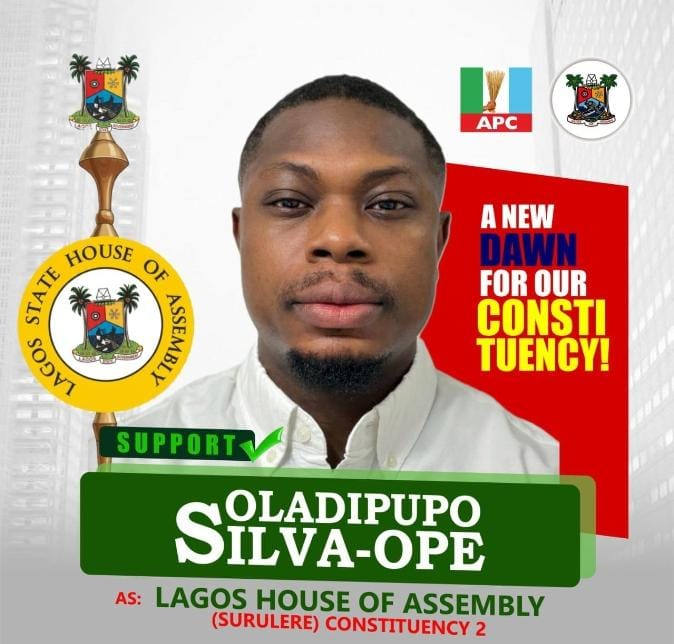
THE TIME IS NOW: LET US PUT OUR MONEY WHERE OUR MOUTH IS! To all true sons, daughters, and lovers of Lagos, we are making gradual progress! First, we must thank our people for finally waking up and standing firm to correct the anomalies of the past. We saw this massive progress in the Ojo area, where we stood our ground to ensure Bolaji Robert (Bibire) secured the APC ticket over an Edo candidate, Temidayo Aganga-Williams. We protected our heritage then, and we must do it again. With the Senate primary coming up on Monday the 18th, and the State House of Assembly primary following closely on Wednesday the 20th, the battle line is drawn. For the Surulere Constituency II House of Assembly ticket, we are faced with a clear choice. It is a contest between two young people, but more importantly, it is a defining contest of Indigene vs. Non-Indigene. We acknowledge the youth of Barr. Damilola Ayinde Marshal. However, the truth is written in stone: she is a proud daughter of the legendary musician K1 De Ultimate, hailing from Ijebu Ode, Ogun State. Her father even recently contested for the highly revered seat of the Awujale of Ijebuland. Ogun State is her heritage, not Lagos. Just as Mudashiru Obasa (Agege) and Kafilat Ogbara (Kosofe) represent Ogun State interests in Lagos, and James Faleke represents Kogi, we cannot afford to give away Surulere Constituency II. For Surulere Constituency II, our mandate belongs to a true son of the soil: OLADIPUPO SILVA-OPE. Ope is a brilliant, young, modern professional (a Software Developer at TATA), and his Lagos roots are deep and undeniable. He is a proud Awori man hailing from Ile Ope Olayigbade, Ope Compound in Epetedo, Lagos Island. He is the great-grandson of the notable Alhaji Sulu Akanbi Ope. You cannot separate the tree from its roots. Ope understands our culture, our struggles, and our future because he is one of us. If we truly want to secure Lagos for Lagosians, we must stop complaining online and take action. We challenge our Yoruba people: It is time to put our money where our mouth is! Let us fund, support, and vote for our own. This Wednesday the 20th, let us correct the system. Let us vote for competence and true representation. Support and Vote OLADIPUPO SILVA-OPE for Lagos State House of Assembly, Surulere Constituency II. A New Dawn for our Constituency! Signed: Baba Awori
2
9
20
709
The Music Has Stopped: A Message from the Indigenes of Lagos State In the timeless, proverbial wisdom of Chief Commander Ebenezer Obey, Yoruba music teaches us about the boundaries of human interaction, destiny, and the consequences of overstepping. There is a limit to the dance a man can dance in another man's compound before he breaks the pots. In our local street parlance today, the message is simple: "Carry your bike and go, the playtime is over." For too long, the indigenous people of Lagos State—the Aworis, the Ijebus, and the original settlers of this coastal land—have watched the political landscape of our home become a playground for everyone but us. We have watched political actors play a game of appeasement. It is like watching a vulture eat your flesh while you are still alive, only to be gaslit and told to be grateful for the type of vulture feeding on you. But the music has stopped, and the original owners of the land are awake. To our Igbo neighbors to the East: The Yoruba people are inherently accommodating; hospitality is the bedrock of our culture. We have welcomed you, traded with you, and shared our space so that you can thrive. But there is a universal law of nature: a guest, no matter how wealthy or comfortable, does not serve the landlord an eviction notice in his own facility. Issuing political ultimatums, demanding specific executive and legislative seats as "non-negotiable," and threatening the political structure of your host state is a gross overreach. Furthermore, we see the new political maneuvers being orchestrated. We see the proliferation of campaign posters of your people (Igbo) flooding every part and corner of Lagos State under the umbrella of the ADC and other new political platforms, boldly attempting to claim territories that are not yours. You are testing the depth of the river with both feet. A level playing field exists for residents, but it does not equate to the erasure of the indigenous people. You cannot usurp the inheritance of the landlord while standing in his compound. To the non-indigene Yorubas and other political actors holding the reins in Lagos State: Let this also serve as a subtle but unmistakable reminder. We share a broader cultural kinship, but kinship does not justify the erasure of the true Lagosian identity. Do not use the unity of the Yoruba race or party loyalty as a smokescreen to marginalize the indigenes of Lagos State in our own home. We see the blatant disrespect unfolding right before our eyes. You engineer a situation where Lawrence Olanrewaju Iyere (aka Lol), a man from Edo State, is asked to step down for Taiwo Ayedun (popularly known as "Shanana"), a man from Ondo State—and all of this is being traded right here on Awori land. Yet, you expect the Awori people to sit back, smile, and be "clapping for Jesus" while outsiders swap our political inheritance among themselves to keep us pacified. As Ebenezer Obey reminds us through his evergreen strings, every man has his own destiny, his own time, and his own rightful place. You cannot continue to bring in those who do not have their roots in this specific soil to rule us. The era of political appeasement at the expense of the Lagos State indigene is coming over. We are observing the ultimatums. We see the posters. We are watching how everyone is acting on our soil. And as the true indigenes of Lagos State, we will respond soon. Signed: Baba Awori
6
5
12
730
The Oshodi-Isolo Paradox: The "Stranger" Empowers His Kinsmen While Our "Brothers" Steal for Their Stomachs Let us stop hiding behind the weaponized political correctness of "diversity." What is happening in Lagos State politics is not a "melting pot" or "inclusion"—it is the open-daylight stealing of Lagos State Indigenes ancestral political rights, packaged as a convenient lie so we hand over our wealth with a smile. The recent brazen publication by Hon. Okey-Joe Onuakalusi @HOJ_Onuakalusi Imo State indigene representing Oshodi-Isolo—where he proudly listed the constituents he sponsored to China using our resources, has predictably triggered my fellow Yoruba folks. The list heavily favored his own kinsmen. But as an Awori man, my anger is not just directed at his audacity on my ancestral land. My anger is directed at the rot inside our own house that allowed it to happen. Historically and administratively, Lagos State is roughly 84% Awori ancestral land, with the rest belonging to the Ijebu and Ogu people. Our Kings, like the Osolo of Isolo, are fully recognized, and our roots run deep. Yet, today, the true indigenes are treated as political spectators on their own soil. Why? Because the foundation of this hijack was laid by Yoruba non-indigenes. Politicians from Osun, Ogun, Ondo, and Ekiti migrated here, hijacked the local political machinery, and pushed the indigenous Awori to the back of the bus. They took our loyalty for granted, neglected the grassroots, and created a massive political vacuum. By breaking the wall of indigenous representation, these Yoruba "strangers" left the door wide open. Today, non-Yorubas have simply walked in to claim the prize. This broken system allowed non-Yorubas to easily step in and claim the spoils. Today, we are seeing the results: Okey-Joe Onuakalusi in Oshodi-Isolo, Thaddeus Attah in Eti-Osa, and historical precedents like Oghene Egoh in Amuwo-Odofin. If you want to understand the sheer tragedy of this, look at the political directories for Nigeria. In Imo State, 100% of the political representatives—Senators, House of Reps, and Assembly members—are indigenous Igbos. They fiercely protect their ancestral land and resources. Yet, an Igbo man can leave his fully represented home state, ride a political wave into Awori territory, and take federal allocations (which are heavily funded by Lagos revenues) to empower his own tribe. And here is the scariest part: Okey-Joe’s China list was made public. He didn't even try to hide it. If this level of brazen ethnic favoritism is what they have the audacity to do in broad daylight, imagine the contracts and resources being quietly siphoned behind closed doors. But this brings us to the most painful, bitter truth that the Yoruba political establishment must swallow. Yes, Okey-Joe Onuakalusi is taking Awori resources. But at least he is actually using them to empower his own people! He is sending his kinsmen abroad for training in Elite Agriculture, Cyber Security, and Artificial Intelligence. He has a clear agenda to build the future of his demographic. Now, I must ask our Yoruba non-indigenes who have monopolized Lagos politics for decades, and the few Awori politicians who manage to hold seats: What are you using your own "stolen" mandates for? Where are your own lists of Awori youths being sent abroad? What community are you building? The tragic reality of Lagos politics today is this: the outsider who captures our resources is at least investing them to build his tribe, while our own so-called "Yoruba brothers" and local leaders pocket the funds to build mansions for themselves, leaving the grassroots empty-handed. We can cry about Okey-Joe’s audacity on social media all we want. But until the Awori and true Lagos indigenes wake up, clean out the local political establishment that sold us out, and demand our rightful percentage of representation, our ancestral wealth will continue to be shared by everyone else but us. Signed: Baba Awori.
14
21
33
1,907
Ashipa (Fagade): Founder of the Oba Dynasty of Lagos and Architect of Benin's Political Hegemony Ashipa, also known as Fagade, stands as the progenitor of the Oba of Lagos dynasty, marking a pivotal moment in the city's political history. His story intricately weaves together indigenous Awori lineage with the decisive political intervention of the powerful Benin Kingdom, fundamentally shaping the monarchical structure that would govern Lagos Island for centuries. Origin and Indigenous Awori Identity Ashipa was an Awori prince from Isheri, a significant early settlement on the Ogun River and the ancestral home of the Awori branch of the Yoruba nation. He was a direct descendant of Olofin Ogunfunminire, the primordial visionary who established the Awori presence. This lineage firmly grounds Ashipa within the indigenous Awori heritage and the traditional landowning structures of the Idejo families. His Awori identity is explicitly noted in historical records. The Benin Connection and the Establishment of the Obaship The formal establishment of the Oba of Lagos dynasty was a direct consequence of Ashipa's interactions with the formidable Benin Kingdom. This event represents Benin's successful political penetration into the Eko/Lagos area, which occurred years after earlier Awori inhabitants, including the powerful Olofin with his wife Ajaye (circa mid-1500s), had fiercely resisted Benin's initial attempts to assert dominance. Ashipa's strategic diplomacy was key. Following the death of Isheru (Asheru), a Benin military commander operating in the Lagos region, Ashipa undertook the culturally significant act of conveying Isheru's remains back to Benin for burial. This act of respect and collaboration profoundly impressed the King of Benin. In recognition of Ashipa's friendly disposition and, crucially, his Yoruba royal lineage, the King of Benin conferred upon him the prestigious title of Olori-ogun of Lagos (meaning "head war chief"). This appointment came with the vital insignia of office: a ceremonial sword and the royal drum, Igbędu. The Benin King also dispatched attendants to accompany Ashipa, ostensibly to assist him in governing Lagos, though these figures likely served to ensure Benin's interests were upheld. This act formally designated Ashipa as the first head Chief or King (Oba) of Lagos, thereby founding the Oba of Lagos dynasty. This pivotal event is dated to circa 1682–1716, marking the commencement of Ashipa's reign. This Benin-orchestrated establishment of kingship "transformed Lagos from an unimportant dependency of Iddo into a state with its own king, deriving considerable importance from its role as the center of Benin power in the lagoon area". It is essential to emphasize that while Ashipa was Awori, the institutional framework of the Lagos Obaship originated from this external Benin political act, imposing a new royal structure upon the pre-existing indigenous Awori traditional landowning framework of the Idejos. Relationship with the Olofin and Idejo Authority Ashipa's reign initiated a complex, multi-layered governance structure in Lagos. While the Oba of Lagos (beginning with Ashipa) held supreme royal authority on Lagos Island, the indigenous Idejo landowning chiefs (descendants of the earlier Olofin figures) continued to assert their ancestral claims over their respective territories. The Oloto, for instance, remained the traditional sovereign of Iddo Island and parts of the mainland, never paying tribute to Benin. The early Kings of Lagos, Ashipa's direct successors, acknowledged the King of Benin as their suzerain and paid tribute, recognizing Lagos as a subject place. This ongoing tributary relationship underscored the external origin of the Obaship's legitimacy. However, over time, as Lagos grew in economic power, its Obas gradually asserted more autonomy. Legacy and Honors Ashipa's most profound honor and enduring legacy is his foundational role as the progenitor of the Oba of Lagos dynasty. His appointment as Olori-ogun, later evolving into the title of Oba, symbolized the centralization of political and military power on Lagos Island. He is revered as the starting point of the royal line that continues to govern Lagos today. Descendants: The Enduring Oba Dynasty of Lagos (1682–Present) Ashipa's legacy is prominently displayed through the unbroken line of Obas who have reigned in Lagos, all directly tracing their descent from him. The provided genealogical table and Oba list offer a detailed chronology of his successors, showcasing the deep historical continuity of the dynasty Ashipa founded. The lineage of the Obas of Lagos, from Ashipa to the present, is as follows: Ashipa (Awori Prince from Isheri): 1682–1716 Ado: 1716–1755 (Son of Ashipa) Gabaro: 1755–1760 (Son of Ado) Akinsemoyin: 1760–1775 (Son of Ado) Eletu Kekere: 1775–1780 Ologun Kutere (also Ologunkutere / Ologunkuture): 1780–1801 (Son of Erelu Kuti, who was Addo's daughter, making Ologun Kutere Ashipa's great-grandson) Interregnum between Ologun Kutere and Adele: 1805–1811 Adele Ajosun: 1811–1821 Osinlokun Ajan (Oshinlokun, Eshinlokun): 1821–1829 Idewu Ojulari: 1829–1835 Adele Ajosun (second Term): 1835–1837 Oluwole: 1837–1841 Akitoye: 1841–1845 Kosoko: 1845–1851 Akintoye (Second Term): 1851–1853 Dosunmu: 1853–1885 Oyekan I: 1885–1900 Eshugbayi Eleko: 1901–1925 Ibikunle Akitoye: 1925–1928 Sanusi Olusi: 1928–1931 Eshugbayi Eleko (second Term): 1931–1932 Falolu Dosunmu: 1932–1949 Adeniji Adele: 1949–1964 Adeyinka Oyekan II: 1965–2003 Rilwan Akiolu: 2003–Present The unbroken succession, stretching from Ashipa to the incumbent Alaiyeluwa Oba Rilwanu Babatunde Akiolu I, demonstrates the profound and lasting impact of Ashipa's foundational role in Lagos's history. The enduring veneration of this lineage is central to Lagosian traditional identity and governance. This dates may be off. Modern Recognition Ashipa's status as the founder of the Oba dynasty is fundamental to Lagosian traditional and political identity. Ashipa, acknowledging his role and his descendants to the present Oba, serve as powerful symbols of continuity and legitimacy. The persistent celebration of the Obaship, rooted in Ashipa's initial appointment, underscores his enduring significance in the cultural and political life of modern Lagos. Signed: Baba Awori Follow on X @EOyigi
7
23
52
8,890
The Idejos: Keepers of the Land – The Oniru Chieftaincy: Sovereign of Imahin and Master of Coastal Territories The Idejo chiefs, distinguished by their "White-Cap Chiefs" (Onifila-Funfun) insignia, form the venerable landowning aristocracy of Lagos. Their foundational authority stems from the lineage of Olofin Ogunfunminire, the legendary progenitor of the Awori people. Among these prominent figures, the Oniru Chieftaincy holds a particularly significant and ancient historical position, notable for its early establishment as a sovereign Oba and its expansive control over crucial coastal and lagoon-side territories of Lagos. Origin and Relationship to the Olofin The Oniru is explicitly identified as one of the natural children of the Olofin of Iddo. This direct ancestral link firmly places the Oniru Chieftaincy within the core landowning families descended from the original Awori settlers of the Lagos lagoon area. The Oniru was among the Olofin's children who ventured from Iddo Island to establish their own distinct settlements. When the first Oniru established his domain, the place was named Imahin, from which he derived his original title: Oniru Oba Imahin. This signifies that the Oniru initially held the status of an Oba in his own right, exercising sovereign authority over his territory. Domain and Seat of Authority: Expansive Coastal Holdings The Oniru's domain was remarkably extensive and strategically vital. He originally shared a boundary with the Aromire on Lagos Island. His landholdings on Lagos Island were vast, covering areas stretching up to Igbosere Road, and historically included significant landmarks such as the old soldiers' barracks (known as Ago Hausa), the present site of the City Hall, and Tafawa Balewa Square. Furthermore, the Oniru's territory extended to Ikoyi, encompassing land through Macgregor Canal and Queens Drive (now Oyinkan Abayomi Drive). His influence also reached areas along Five Cowries Creek. This expansive domain connected the Oniru's authority with the Ojomu of Ajiran and extended along the sea beach back to the Marina on Lagos Island, making him a crucial custodian of Lagos's maritime gateways and interior coastal lands. A notable acquisition on Oniru land by the Colonial Government was the site for the Lighthouse, a critical navigational aid for ships entering the Lagos Lagoon. This demonstrates the strategic importance and recognized value of the Oniru's domain. Role and Traditional Authority: From Sovereign to Idejo The Oniru, as an "Oba in his own right" (Oniru Oba Imahin), initially exercised independent sovereign powers over his domain. This distinguished him as a traditional ruler with significant autonomy. However, the political and economic landscape of Lagos evolved considerably. As the Oba of Lagos (the Benin-derived monarchical institution) grew in affluence and prominence, the Oniru, like other Idejos, became "obliged to move closer to the Oba of Lagos who had become so affluent that they unconsciously regarded themselves as ordinary Chiefs in their relation with the Oba of Lagos". This reflects a pragmatic adaptation, where the Oniru, while retaining his ancestral land rights, integrated into the broader Idejo hierarchy under the overarching, albeit distinct, authority of the Oba of Lagos. He maintained his role in local governance and traditional ceremonies. Historical Interactions with Benin and the Obaship of Lagos The Oniru Chieftaincy, with its indigenous Awori origins and initial status as a sovereign Oba, existed within a dynamic period marked by the increasing influence of the Benin Kingdom on Lagos Island. The Obaship of Lagos as an institution was established through Benin's political intervention. Ashipa (Fagade), an Awori chief from Isheri, was appointed the first Oba by the King of Benin. This introduced a new layer of royal authority over the existing traditional landowning framework of the indigenous Idejos. The Oniru's early status as "Oba Imahin" suggests a pre-existing sovereign authority that would have predated or developed independently of Benin's direct imposition of the Oba of Lagos title. His subsequent shift towards being regarded as an Idejo Chief in relation to the Oba of Lagos indicates the subtle but significant ways in which indigenous power structures adapted to the new Benin-derived royal presence and later, to the British colonial administration. Land Ownership and Colonial Challenges The Oniru's extensive landholdings were highly significant during the British colonial period. The acquisition of land for the Lighthouse by the Colonial Government is a prime example of how British administrative needs impacted traditional land tenure. The legal battles over land rights in Lagos, particularly the landmark Amodu Tijani v. The Secretary, Southern Nigeria (1921) Privy Council case, were crucial in defining the status of Idejo land. This ruling affirmed the "full usufructuary title" of head chiefs like the Oniru on behalf of their communities, providing a legal basis for their traditional custodianship even as the British Crown asserted "radical title". Notably, Chief Yusufu Abiodun Oniru (1934–1983) "fought gallantly to receive adequate compensation from the Government" for Oniru land and went to London in 1950 to prosecute an appeal at the Privy Council. He was instrumental in getting the government to relinquish what remained of the Oniru land to the family. His long reign (1934-1983) and efforts to secure the family's land are highlighted as significant achievements. Oriki (Praise Names) There is no specific Oriki (praise poetry) for the Oniru Chieftaincy in the same detailed manner as for Olumegbon, Ojomu, Oloto, or Onikoyi. However, as a direct descendant of the Olofin and a recognized Idejo Chief, the Oniru would undoubtedly be celebrated through various traditional praise forms that honor his ancestral lineage and his control over his extensive domain. Signed: Baba Awori Follow on X @EOyigi
13
24
584
The Idejos: Keepers of the Land – The Oluwa Chieftaincy: From Sovereign Oba to Idejo Custodian of Iwa The Idejo chiefs, distinguished by their "White-Cap Chiefs" (Onifila-Funfun) insignia, form the venerable landowning aristocracy of Lagos. Their foundational authority stems from the lineage of Olofin Ogunfunminire, the legendary progenitor of the Awori people. Among these prominent figures, the Oluwa Chieftaincy holds a unique historical trajectory, evolving from an independent sovereign ruler (Oba of Iwa) to an esteemed Idejo Chief, highlighting the intricate dynamics of power and territorial claims in early Lagos. Origin and Relationship to the Olofin The Oluwa is identified as one of the children of the Olofin of Iddo. His title, Oluwa, is a shortened form of "Olu of Iwa." Iwa is identified as a town very near Badagry, and in certain areas of Yorubaland, "Olu" connotes the same meaning as "Oba" (King). Thus, historically, the Oluwa was considered the Oba of Iwa in his own right. This indicates a direct ancestral link to the Olofin Ogunfunminire and an early, independent royal status. The earliest Olu of Iwa to settle in Lagos was Kumuyi. He was the one who later accepted to be classified as an Idejo Chief, resulting in his title being changed from "Olu of Iwa" to "Chief Oluwa". This transition from an independent "Oba in his own right" to an Idejo Chief signifies a significant adaptation to the evolving political landscape of Lagos. Domain and Seat of Authority The Oluwa established his domain on Lagos Island, occupying a specific portion of the Marina foreshore. This territory shared boundaries with other prominent Idejo chieftaincies, notably the Oniru and Aromire. The specific area of Lagos formerly known as Ehingbeti was part of this Marina, which later became known as Itolo Wharf Odo Moses. Oluwa Chieftaincy, while not possessing "a vast area of land" compared to some other Idejos, uniquely owned the whole of Alakoro Marina. This strategic control over a crucial waterfront area underscores the Oluwa's importance in early Lagosian commerce and its spatial organization. Role and Traditional Authority As an Oba of Iwa in his own right, the Oluwa would have exercised full sovereign powers over his domain, overseeing governance, trade, and cultural affairs. His later acceptance of classification as an Idejo Chief, however, necessitated a change in status. He was "obliged to move closer to the Oba of Lagos who had become so affluent that they unconsciously regarded themselves as ordinary Chiefs in their relation with the Oba of Lagos". This implies a strategic alignment to maintain influence within the rising power of the Oba of Lagos, even if it meant adjusting his former independent royal status. As an Idejo, the Oluwa participated in the collective governance structures and cultural events of the Olofin's descendants. Historical Interactions with Benin and the Obaship of Lagos The Oluwa Chieftaincy, with its origins as an independent "Oba of Iwa," existed during a period marked by the increasing influence of the Benin Kingdom on Lagos Island. The Obaship of Lagos as an institution was established through Benin's political intervention, with Ashipa (Fagade), an Awori chief, being appointed the first Oba by the King of Benin. This introduced a new, Benin-derived layer of royal authority over the existing traditional landowning framework of the indigenous Idejos. The Oluwa's transition from an independent Oba to an Idejo Chief reflects the broader political shifts and centralizing tendencies that occurred with the consolidation of the Oba of Lagos's power, particularly as the Oba became more "affluent". While his ancestral land rights were recognized, his political positioning adapted to the new power dynamics, acknowledging the growing prominence of the Oba of Lagos. Land Ownership and Colonial Challenges The Oluwa's ownership of Alakoro Marina would have been a significant asset, particularly during the British colonial period when waterfront land became highly valuable for commerce. Like other Idejo chiefs, the Oluwa's traditional claims to land were subject to scrutiny and legal interpretation under British rule. The landmark Amodu Tijani v. The Secretary, Southern Nigeria (1921) Privy Council case, which involved another Idejo chief, established the "full usufructuary title" of head chiefs on behalf of their communities, even when the British Crown asserted "radical title". This legal precedent would have helped to validate the Oluwa's traditional custodianship of Alakoro Marina against colonial claims. Oriki (Praise Names) The Oriki of Oluwa provides a rich narrative of the chieftaincy's identity, attributes, and historical importance: "Nmoru Iwa, Nmase Iwa" "Omo Asehun, ma pekan" "Omo apekan ma fun Obinrin je" "Omo Elede Kasha Lakobi" "Omo Elegba meta L'Apapa" "Omo Agbe lehin Osa" "Omo Ajede Ni wasa" "Omo Kutere Asalogun" "Omo Elehinju Agbeseiye" "Baba mi Omo Oloyon gogo" "Baba niyi loko, O niyi lagbami" "Omo mewa nile, mewa loko" "Omo Igi ogba o ba le" "Nmoru, omo egi" "Omo arogi raba" "Omo araba ro gbedu ajina" "Omo Aja orere kekere nilosho" "Omo Akenigbo keru o ba ara ona" "Omo asinhun lori Eru, beruku baki a ra mi" "Ogbolu Ope ko se mi" "Omo Ajidagba bi ogede, o dagba tan ara la won" "Titi-olote, ajiyo bi ogan" "Eniti olote nberu taraye nfojudi" "Omo olode ajigba, sukukosu, abile gbangba loju yewa" "O jare odale, o jare eke, O ko bi fosika, ko wa fi enu ara re wure, ko fi pa re" "Ma wo o, nmebi" "Omo Iroko Ilado" "Omo Nana kukuru lode Ereko" "Nmoru, Omo Egi" "Eni gbedu ki ki ki ti ko le ki tan" "Omo Olowo joyemeji, ogbe keta hanu" "A kosa ma kogun Oba" "Oluwa da won geregere wo do" These praise poems celebrate the Oluwa's royal lineage ("Omo Olofin Ajaiye," "Nmoru Iwa"), his extensive landholdings ("Omo mewa nile, mewa loko"), his wisdom, and his ability to command respect and prosperity. Signed: Baba Awori Follow on X @EOyigi
7
9
706
The Idejos: Keepers of the Land – The Onisiwo Chieftaincy: Ruler of the Coastal Lagoon and Gateway to Commerce The Idejo chiefs, distinguished by their "White-Cap Chiefs" (Onifila-Funfun) insignia, constitute the venerable landowning aristocracy of Lagos. Their foundational authority stems from the lineage of Olofin Ogunfunminire, the legendary progenitor of the Awori people. Among these prominent figures, the Onisiwo Chieftaincy holds a significant historical position, particularly for its strategic domain along the coastal lagoon, making its holder an influential figure in both indigenous governance and early maritime activities. Origin and Relationship to the Olofin The Onisiwo is unequivocally identified as one of the children of the Olofin of Iddo. This direct ancestral link firmly establishes the Onisiwo Chieftaincy as a primary landowning family, rooted in the indigenous Awori settlements that predated the Benin-established Obaship in Lagos. As one of the Olofin's children, he, like his Idejo siblings, initially resided on Iddo Island before venturing out to establish his own distinct domain. Domain and Seat of Authority: Ogogoro and the Lighthouse The Onisiwo's chosen domain was strategically located on Lagos Island, specifically "on that part of the lagoon which is very near the sea," an area known as Ogogoro. This coastal position was crucial for maritime activities and trade. The Onisiwo's authority extends over significant water-bound territories, including Abagbo and Tomaro. A notable aspect of the Onisiwo's land is the site where the Lighthouse was constructed. This vital navigational aid, essential for guiding ships entering the Lagos Lagoon, was built on land that originally belonged to the Onisiwo. This land was subsequently acquired by the Colonial Government for the purpose, highlighting the importance of the Onisiwo's territory to the broader commercial and strategic interests of Lagos. Role and Traditional Authority The Onisiwo historically held the status of an Oba in his own right, a testament to his independent traditional authority and control over his domain. This status indicates a level of sovereignty comparable to that of other early traditional rulers. However, with the increasing affluence and political prominence of the Oba of Lagos, the Onisiwo, like other Idejos, became obliged to move closer to the Oba, signifying an evolving, yet respectful, relationship within the broader traditional hierarchy. As an Idejo Chief, the Onisiwo would have played a role in the collective governance structures of the Olofin's descendants and participated in important traditional ceremonies. Historical Interactions with Benin and the Obaship of Lagos The Onisiwo Chieftaincy, rooted in indigenous Awori origins, operated within a dynamic political landscape increasingly influenced by the Benin Kingdom. The Obaship of Lagos as an institution was established through Benin's political intervention. Ashipa (Fagade), though himself an Awori chief from Isheri, was appointed the first Oba by the King of Benin. This act created a new layer of royal authority over the existing traditional landowning framework of the Idejos. While the Benin-derived Obaship became the dominant royal authority on Lagos Island, the Onisiwo's foundational land rights and traditional leadership, especially over his strategic coastal domain, remained a significant aspect of the traditional landscape. The historical accounts imply a complex coexistence where indigenous claims continued to hold sway, even as new political realities emerged. Land Ownership and Colonial Challenges The Onisiwo's extensive land claims, particularly along the coastal lagoon and the site of the Lighthouse, would have been subject to colonial scrutiny and acquisition. The acquisition of land for the Lighthouse by the Colonial Government is a clear example of how traditional land rights were impacted by external administrative needs. The broader legal context of Idejo land rights was significantly shaped by cases like Amodu Tijani v. The Secretary, Southern Nigeria (1921). This landmark Privy Council ruling affirmed the "full usufructuary title" of head chiefs on behalf of their communities, validating the traditional custodianship of Idejos, including the Onisiwo, even as the British Crown asserted "radical title" [cite: Amodu Tijani, p.1, p.402]. Oriki (Praise Names) We dont have a specific Oriki (praise poetry) for the Onisiwo Chieftaincy in the same detailed manner as for Olumegbon, Ojomu, Oloto, or Onikoyi. However, as a direct descendant of the Olofin and a recognized Idejo Chief, the Onisiwo would undoubtedly be celebrated through various traditional praise forms that honor his ancestral lineage and his control over his domain. Signed: Baba Awori Follow on X @EOyigi
1
9
26
502
The Idejos: Keepers of the Land – The Ojora Chieftaincy: The Hunter, the Settler, and the Ajiran Legacy The Idejo chiefs, recognized by their distinctive "White-Cap Chiefs" (Onifila-Funfun) insignia, form the venerable landowning aristocracy of Lagos. Their foundational authority stems from the lineage of Olofin Ogunfunminire, the legendary progenitor of the Awori people. Among these prominent figures, the Ojora Chieftaincy holds a unique and ancient position, tracing its origins to a renowned hunter and early explorer who navigated the challenging lagoon environment to establish new settlements. Origin and Relationship to the Olofin The Ojora Chieftaincy's origins are distinctively traced to Mogiso, also known as Ogundamilare. He is identified as a contemporary of Olofin Ogunfunminire. This establishes Mogiso, and by extension the Ojora lineage, as deeply connected to the primordial Awori roots of Lagos. While tradition states that Ojora, Onikoyi, and Mogiso were "adopted" children of the Olofin who sought refuge during war, the narrative further elaborates on Mogiso's independent journey and eventual reunion with the Olofin, suggesting a complex relationship that evolved over time. Mogiso is specifically noted to have come from Ekiti Aramoko. Domain and Settlement: From Iberekodo Onife to Ijora Oloye Mogiso's journey was one of exploration and settlement. When Olofin Ogunfunminire first left Isheri and settled at Iddo Island, Mogiso did not immediately follow. Instead, he ventured independently, navigating through Isheri Creek and the Lagoon. He eventually landed at a point he named Ojomu, where he established a settlement known as IBEREKODO ONIFE. This name signifies a connection to Ile Ife, the cradle of Yoruba civilization, underscoring the deep cultural roots of this foundational settlement. Mogiso sought out the Olofin and eventually met him at Iddo Island, marking a significant reunion. This led to the establishment of a transit (Island) camp, originally known as "Ibi ti ati nje eran" ("where meat is eaten"), which was later shortened to Ajiran. This camp facilitated their activities en route to Iddo from Iberekodo Onife. The Ojora's people later moved from the old site of Iberekodo Onife (now the NEPA Power Station) to their present site, Ijora Oloye. The Ojora domain expanded into the hinterland through Orile Iganmu and shares boundaries with the Oluwa, Onitire, and Oloto chieftaincies. Role and Traditional Authority Mogiso, the progenitor, was primarily a hunter and fisherman. To manage his growing community, he established an administrative structure with two sub-chiefs: Ejimosu (the Aro) for the fishing industry and Asaba (Chief Odofin) for farming and hunting. He trained his eldest son, Kueji, in administration, and Kueji later succeeded him as The Ojora. A unique tradition of the Ojora Chieftaincy stems from Mogiso's travels: he used rafts made of bamboo (OPA) and raffia (Eni Parapara) to traverse the waterways. To this day, this mat (Parapara) is used during the installation of any Ojomu or other important activities at Iberekodo Onife or Ipedi, symbolizing their ancestral mode of travel and settlement. The Ojora participates in the Ose Iga, the Olofin's weekly council, and is a vital part of the Idejo leadership. Historical Interactions with Benin and the Obaship of Lagos The Ojora Chieftaincy, deeply rooted in Awori origins, existed long before the direct imposition of the Obaship of Lagos by Benin influence. Although Ashipa (Fagade), an Awori chief, was appointed the first Oba by the King of Benin, the Ojora, as an Idejo, maintained his traditional land rights. Mogiso's reunion with the Olofin at Iddo and the subsequent establishment of the Ajiran camp highlight the existing indigenous authority structures that predated Benin's direct royal influence on Lagos Island. While the Benin-derived Obaship became the central royal authority on Lagos Island, the Ojora's extensive land claims, particularly on the mainland, continued to be a significant aspect of the traditional landscape. Land Ownership and Colonial Challenges The Ojora Chieftaincy's substantial land claims, particularly around Ijora Oloye and extending into the hinterland, were a recurrent subject of attention, especially during the British colonial period. The fundamental land rights of the Ojora, as an Idejo chief, were brought to the forefront during various inquiries and legal battles. The landmark Amodu Tijani v. The Secretary, Southern Nigeria (1921) Privy Council case, involving another Idejo chief, affirmed the "full usufructuary title" of head chiefs on behalf of their communities, even if the "radical title" vested in the Crown after cession [cite: Amodu Tijani, p.1, p.402]. Recognizing the complexities surrounding the Ojora Chieftaincy's land claims and succession, the Lagos State Government set up the Solanke Tribunal of Inquiry into the Ojora Chieftaincy in 1975. The tribunal's recommendations clarified the ruling houses and established the succession order. Oriki (Praise Names) The Oriki of Ojora vividly captures the essence of the chieftaincy, referring to its origins, its association with trade, and the wisdom of its leaders: "Omo Ojora Apasa" "Omo Oyinbo dudu lode Iganmu" (Child of the European who came to Iganmu) "Omo afomo foko toun tidi e" "Omo Nmoru wa Nma se egi" "Omo Nmorú ti ki run sansan" "Ogberi ko mo" "O pe lesun isu" "Omo epiya meta" "Okan lomi" "Okan loke" "Okan ni shasu iyawo ti ko je ki 'yawo le lo" "Omo aja buru iloso" "Won gbe aja ta won fi ra obo" "Omo onide ka sa lakobi" "Omo o gbe obirin ta fi owo ra akobi" "Omo akobi lo ngbe ni, obirin kii gbe ni" "Omo irinwo opa egberun aje" "Omo asiwun lo ri eru" "Omo beru ba ku, a ra mi" These praise poems highlight the Ojora's foundational role, his connections to European trade (referencing "Oyinbo dudu"), and his enduring legacy. Signed: Baba Awori Follow on x @EOyigi
1
8
21
570
The Idejos: Keepers of the Land – The Onikoyi Chieftaincy: Guardian of Ikoyi and Strategist of Centralization The Idejo chiefs, distinguished by their "White-Cap Chiefs" (Onifila-Funfun) insignia, form the venerable landowning aristocracy of Lagos. Their foundational authority stems from the lineage of Olofin Ogunfunminire, the legendary progenitor of the Awori people. Among these prominent figures, the Onikoyi Chieftaincy holds a significant historical position, notable for its vast landholdings and its strategic relocation to a central part of Lagos Island, underscoring its enduring role in the city's traditional structure. Origin and Relationship to the Olofin The Onikoyi is recognized as one of the children of the Olofin of Iddo. Onikoyi, along with Ojora and Mogiso, were among the Olofin's adopted children who sought refuge and protection from the Olofin during a war. This perspective suggests their integration into the Olofin's extended familial structure. The Onikoyi's people traditionally trace their origins to Ikoyi-Ile, a town near Ogbomoso, from which they migrated to Iddo Island, settling under similar circumstances as the Ojora. Domain and Seat of Authority The Onikoyi's domain was historically extensive. After settling on Iddo Island, the Onikoyi, "like some of the children of Olofin," took up a position beyond the Lagos Island, which was primarily the domain of Aromire. However, in a strategic move reflecting the evolving political and administrative landscape, the Onikoyi later relocated his palace to the present site at Idumota on Lagos Island. This relocation was deliberate, undertaken to facilitate his regular attendance at the Ose Iga (the Olofin's weekly council meetings), highlighting the importance of centralized participation in traditional governance. The land for the Onikoyi's palace at Idumota was granted by Aromire, further illustrating the intricate web of inter-Idejo land tenure and mutual recognition among the Olofin's descendants. Beyond the immediate vicinity of his palace, the Onikoyi Chieftaincy historically claimed extensive land in Lagos, specifically stating that "Onikoyi has no other land in Lagos, except their land at Ikoyi which is very near Lagos". This "land at Ikoyi" refers to a vast area that extended to Moba in the Eti Osa Local Government Council Area of Lagos. This makes the Onikoyi one of the Idejos with the most significant territorial claims. Role and Traditional Authority As an Idejo Chief, the Onikoyi holds the traditional role of a significant landowner and a custodian of ancestral territories. His control over substantial land, including the historically important Ikoyi area, vested him with considerable authority and influence. The relocation of his palace to Idumota demonstrates a proactive approach to maintaining relevance within the changing political geography of Lagos. His participation in the Ose Iga further signifies his role in the collective decision-making and cultural preservation efforts of the Idejo hierarchy. Historical Interactions with Benin and the Obaship of Lagos The Onikoyi Chieftaincy, rooted in the indigenous Awori lineage, existed through periods of significant external influence. The Obaship of Lagos was established through Benin's political intervention, with Ashipa (Fagade), an Awori chief, being appointed as the first Oba by the King of Benin. This introduced a new layer of royal authority over the existing Idejo framework. The Onikoyi's land claims, like those of other Idejos, predated this Benin-derived Obaship. While the Onikoyi, like other Idejo chiefs, would have acknowledged the authority of the Oba of Lagos, particularly after the British intervention, his foundational land rights and traditional leadership remained a strong aspect of his chieftaincy. The grant of land by Aromire for the Onikoyi's palace, rather than by an Oba, also subtly points to the persistent indigenous land-granting authority within the Idejo system, even as the Oba's power grew. Land Ownership and Colonial Challenges The vast landholdings of the Onikoyi Chieftaincy, particularly in Ikoyi, became a significant target for Colonial Government acquisition. The vast area of Ikoyi was acquired by the Colonial Government from the Onikoyi Chieftaincy Family". Furthermore, a "Part of the Moba area was acquired by the then Western Region Government", indicating further loss of traditional lands under colonial rule. This interaction underscores the profound impact of British land policies on the Idejo chiefs, who, despite their ancestral claims, faced systematic erosion of their territorial control by the colonial state. The Amodu Tijani v. The Secretary, Southern Nigeria (1921) Privy Council case, while affirming communal land rights, also set legal precedents that influenced how traditional landownership was recognized and challenged under colonial law. Oriki (Praise Names) The Oriki of Onikoyi provides powerful insights into the chieftaincy's identity, history, and perceived attributes: "Eso Onikoyi" "Omo adile ko 'gun o to de" "Ikoyi o lo ogun Baba enikan o lo" "To ni 'koyi ba koogun sile ti o lo" "O ku baba eniti o lo" "Iwaju Onikoyi ina" "Ehin Onikoyi baba ija" "Eso Ikoyi to ba gbota leyin niseni o se ojo" "Iwaju ni won ti gba ota" These praise poems celebrate the Onikoyi's prowess in warfare, his wisdom, and his role as a leader, reflecting the historical importance of the Ikoyi territory and the chieftaincy's ancestral heritage. Signed: Baba Awori Follow on x @EOyigi
16
28
912