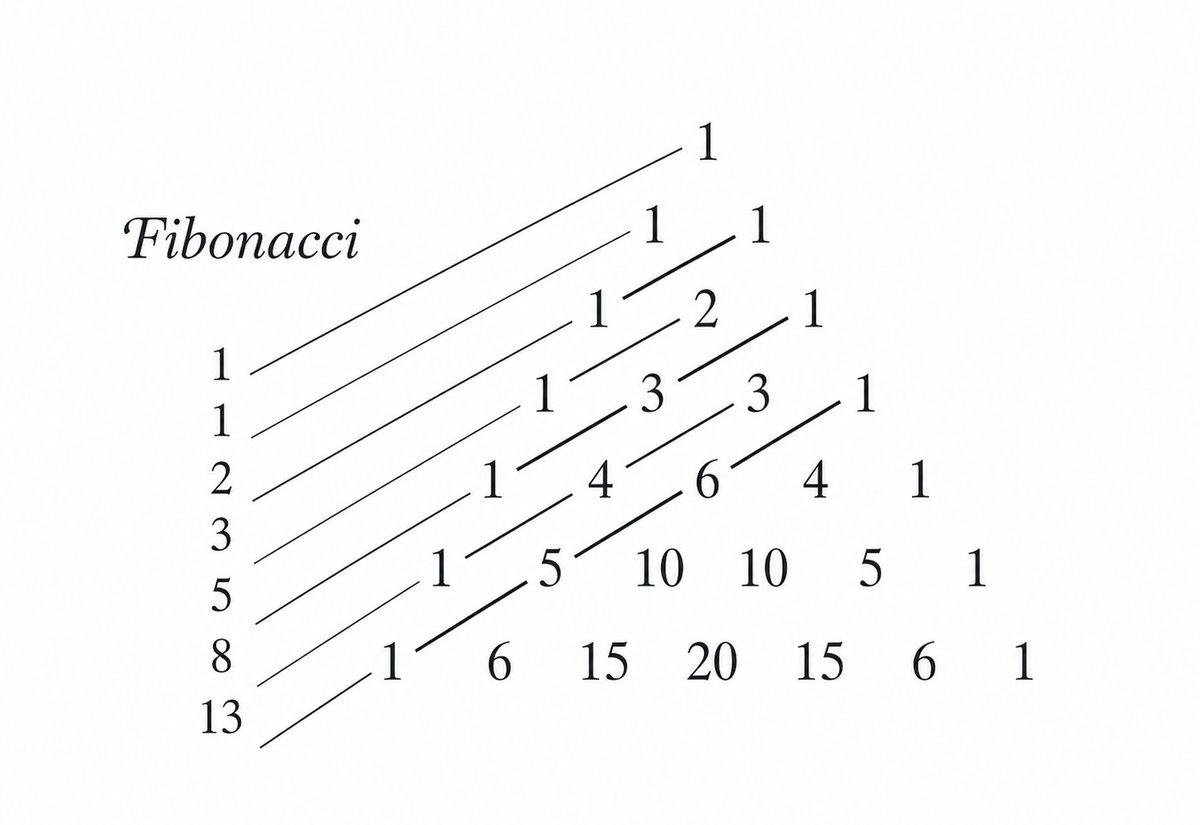

Pascal's triangle arranges binomial coefficients row by row.
Slanted lines mark the rising diagonals whose entries add to the Fibonacci numbers placed on the left: 1, 1, 2, 3, 5, 8, 13.
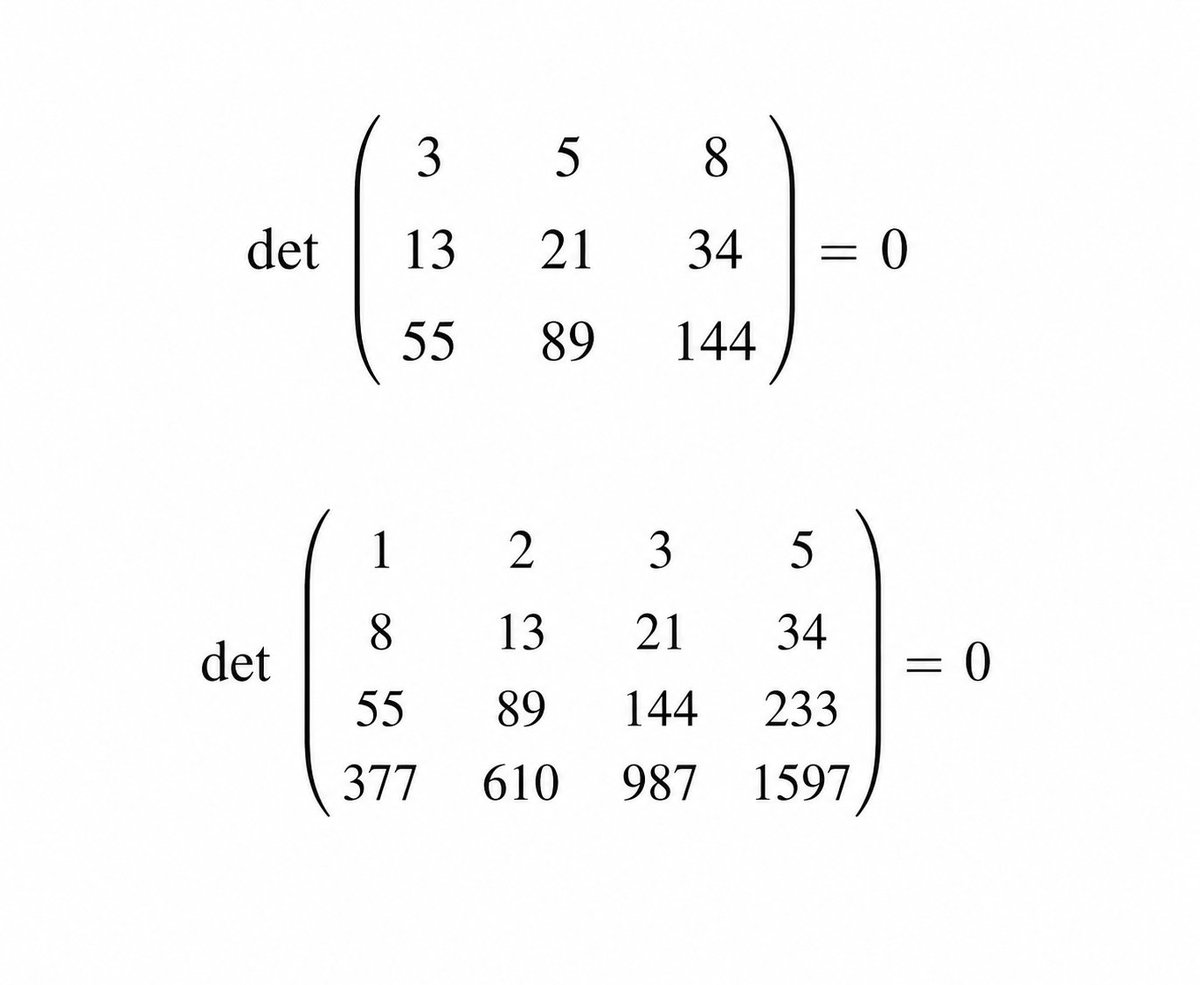
Each new Fibonacci number equals the sum of the two before it, and the same addition rule appears when the diagonals are totaled because binomial coefficients satisfy the recurrence
C(n, k) = C(n-1, k-1) C(n-1, k).