ASI under Ministry of Culture, Govt of India is the premier organization for the archaeological research and protection of the cultural heritage of the nation.

Joined June 2015
3,173 Photos and videos
During the ongoing conservation works by ASI at the Trimbakeshwar Temple, Nashik, a stone Shivalinga was discovered during the desilting of the temple’s historic water tank, locally known as Amrit Kund. The Shivalinga was found at the bottom of the tank while removing accumulated silt and debris. This remarkable discovery highlights how conservation efforts continue to reveal and preserve India’s rich cultural and sacred heritage.
129
1,107
6,288
656,182
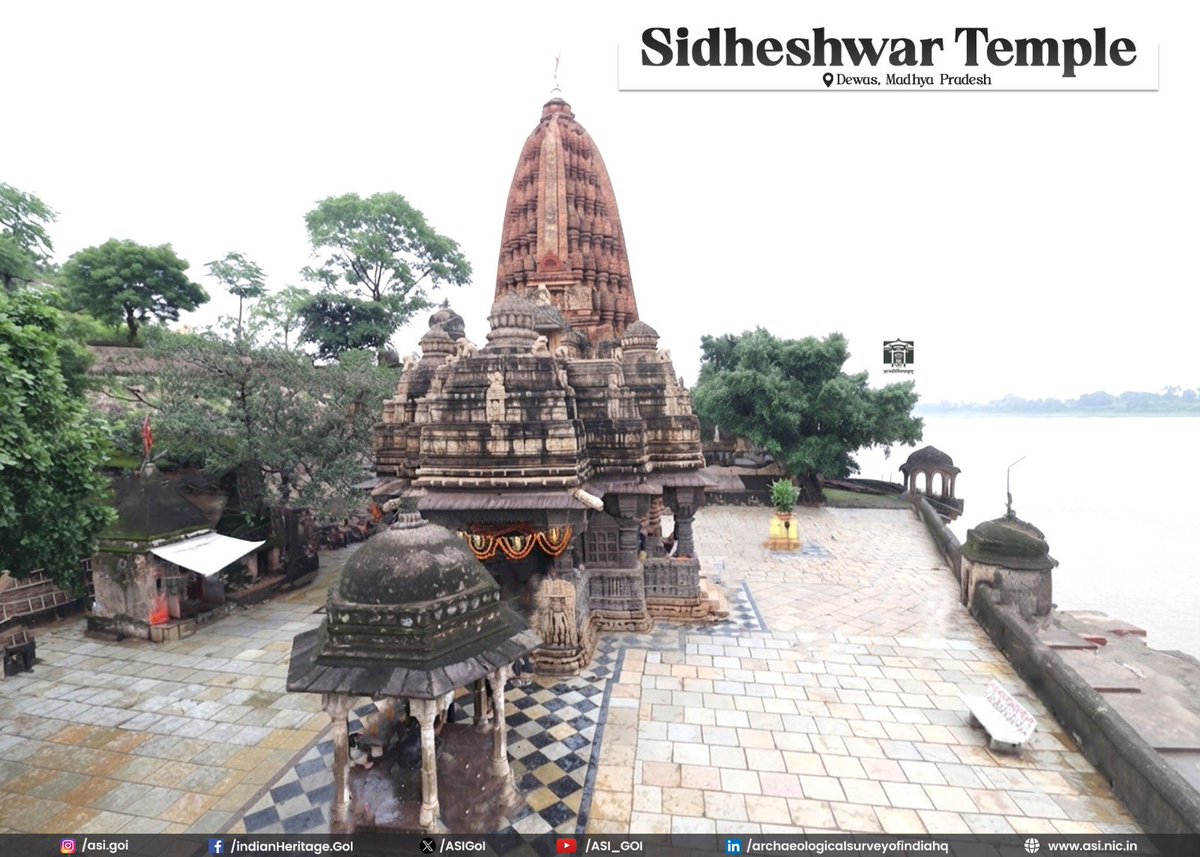
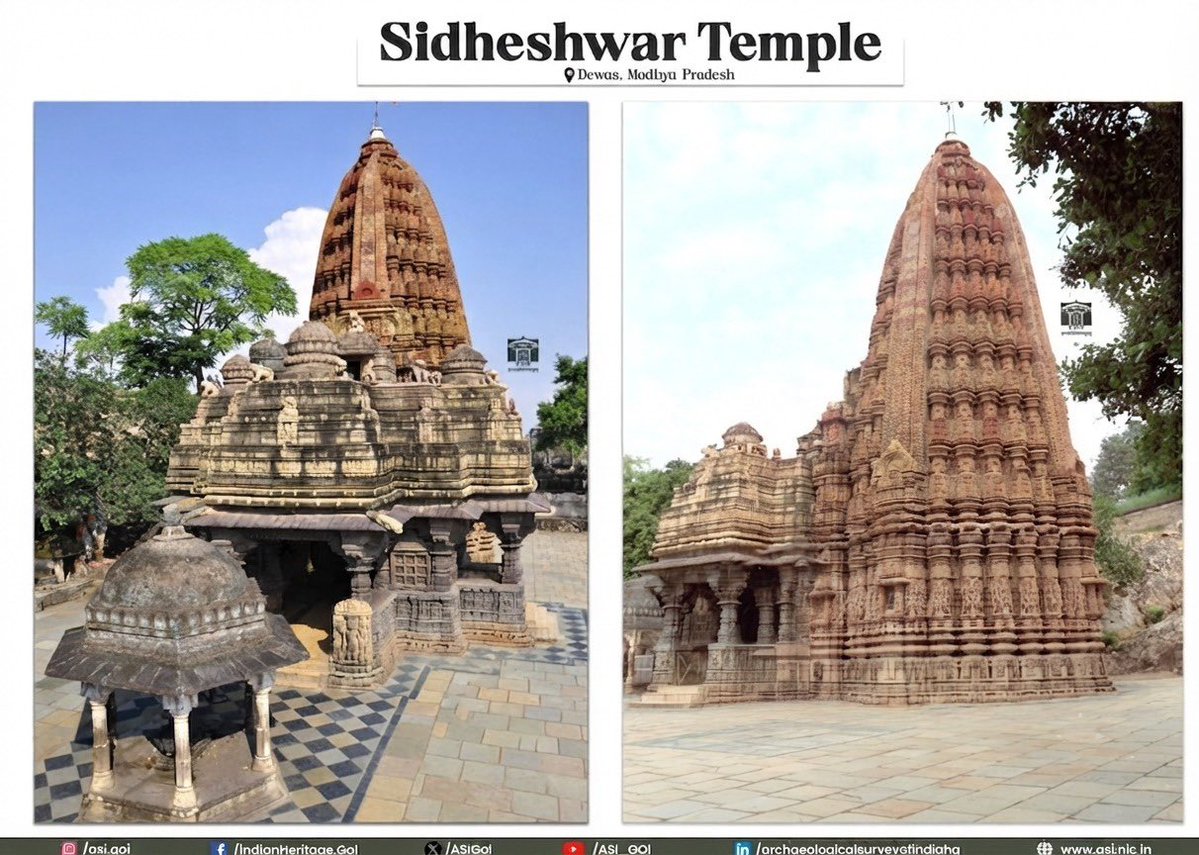
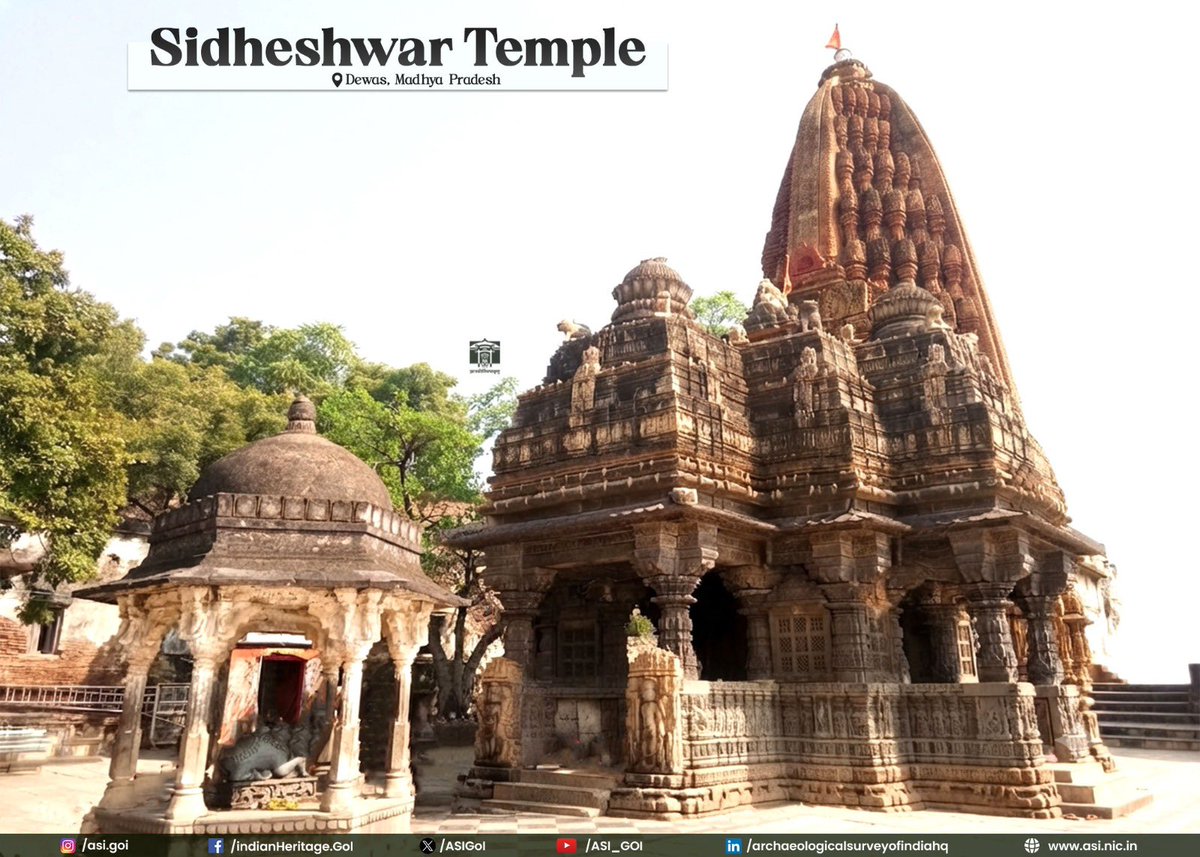
Standing gracefully on the right bank of the Narmada river, the Siddhesvara Temple is a fine example of the Bhumija style of architecture. Built on a distinctive star-shaped plan, the west-facing temple is crowned by a towering nine-storeyed shikhara adorned with miniature spires. Intricate carvings of deities, elegant surasundaris, and floral motifs embellish its walls, while the main niches enshrine sculptures of Andhakantaka, Nataraja, and Chamunda, making it a masterpiece of medieval temple art.
3
58
259
8,495
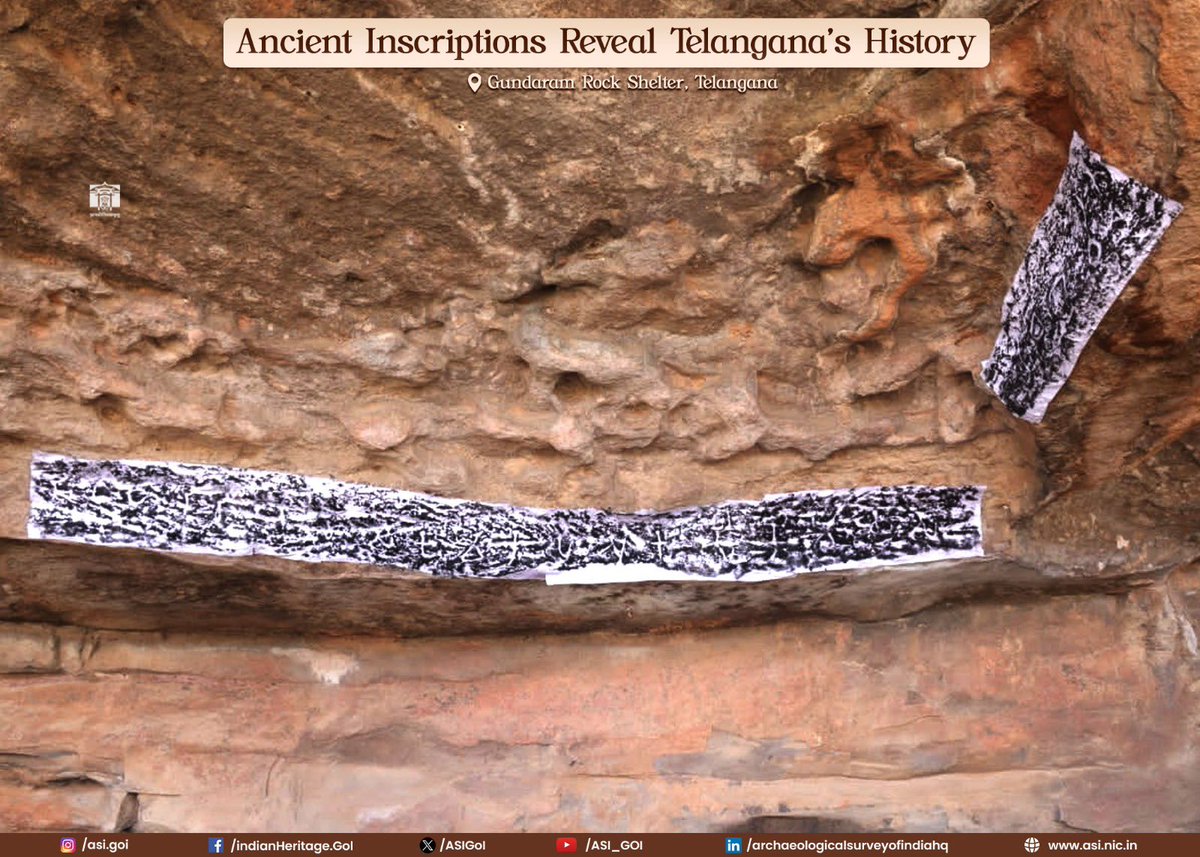
Archaeological Survey of India has discovered two Brahmi inscriptions at the Gundaram rock shelter in Telangana, providing new evidence on the region’s early history and the Satavahana period. One inscription records that a member of the Hāritiputra lineage, likely of the Chuṭu dynasty and a friend of the Satavahana prince Kumāra Hakusiri, excavated the cave for Buddhist monks, suggesting a link between the Chuṭus and the Satavahanas. The second inscription mentions that the area east of the hill was under Siri Devarāna’s authority. It also features the trident and damaru symbols, making it the earliest known inscription in South India to include these auspicious symbols alongside the text.
21
354
1,701
60,121
In Karnataka's Kodagu (Coorg) district, the Iron Age burial sites at the villages of Doddamolathe and Sulimolathe preserve a remarkable legacy of the region's megalithic tradition. Located on Morebetta hill, the Doddamolathe site, spread across 1.26 acres, contains over twenty dolmens enclosed by stone circles. A distinctive feature of these burials is the pair of curved stone slabs at the entrance of each dolmen, forming arch-like structures, some of which resemble anthropomorphic figures. Excavations at these sites have unearthed skeletal remains, Black-and-Red Ware pottery, etched carnelian beads, a gold-coated copper disc, and rice husk, offering valuable insights into Iron Age life. Spread over 1.80 acres, the nearby Sulimolathe burial site forms part of the same burial complex. Its dolmens share similar architectural features, with portholes on its eastern orthostats enclosed by circles of thin slabs erected vertically.
3
18
135
7,137
Located within Ahmednagar Cantonment, Damri Masjid is one of the finest surviving examples of Nizam Shahi architecture. Believed to have been built in 1567 CE through the contributions of the workmen employed at Ahmednagar Fort. The workmen contributed a small daily donation of a damdi (1/16 of a rupee) from their wages to fund the construction of the mosque, thus earning it the name Damri Masjid. The mosque is renowned for its intricate stone carvings and use of unusually large stone blocks. Its facade features three pointed arches framed by richly ornamented square pylons, each crowned with graceful minarets. Delicate carvings adorn the central mihrab, while the ornamental parapet, trefoil-patterned merlons, decorative balconies, and pot shaded mouldings showcase the artistic excellence of the Nizam Shahi period. Inside, the mosque consists of a single prayer hall divided into three aisles, with a flat roof supported by graceful arches resting on octagonal pillars with foliated bases.
2
4
71
5,383
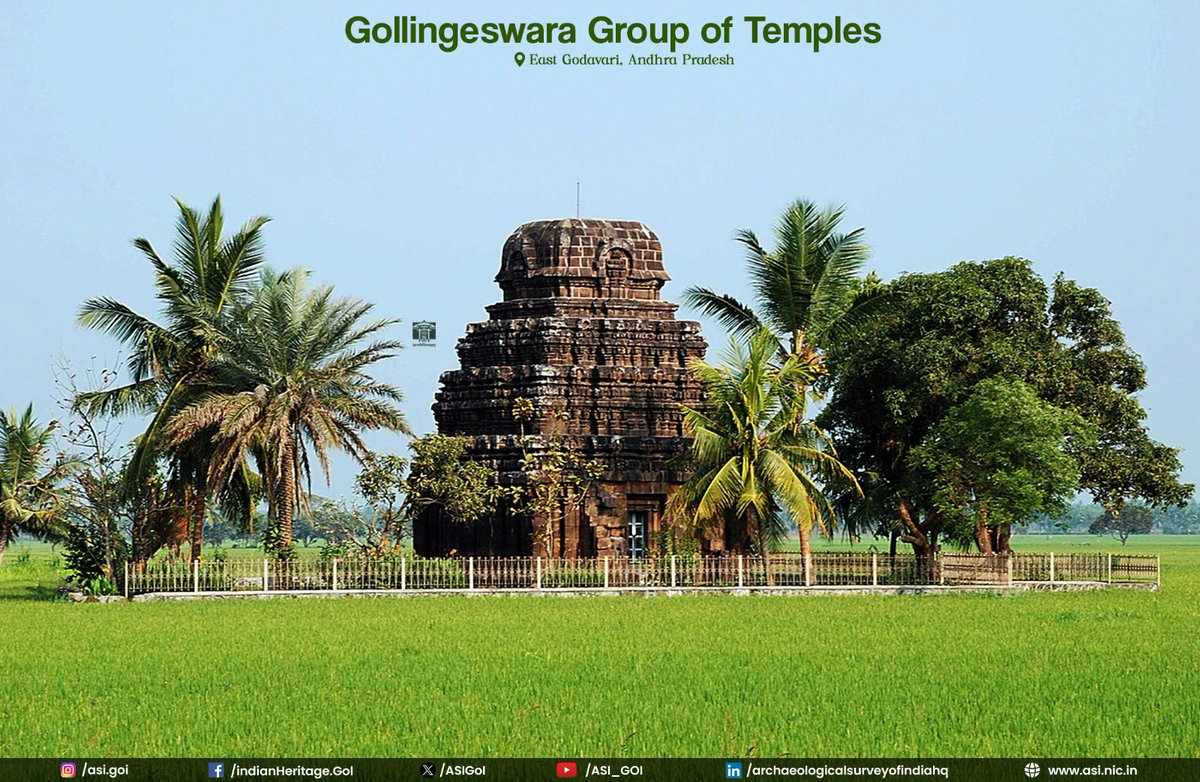
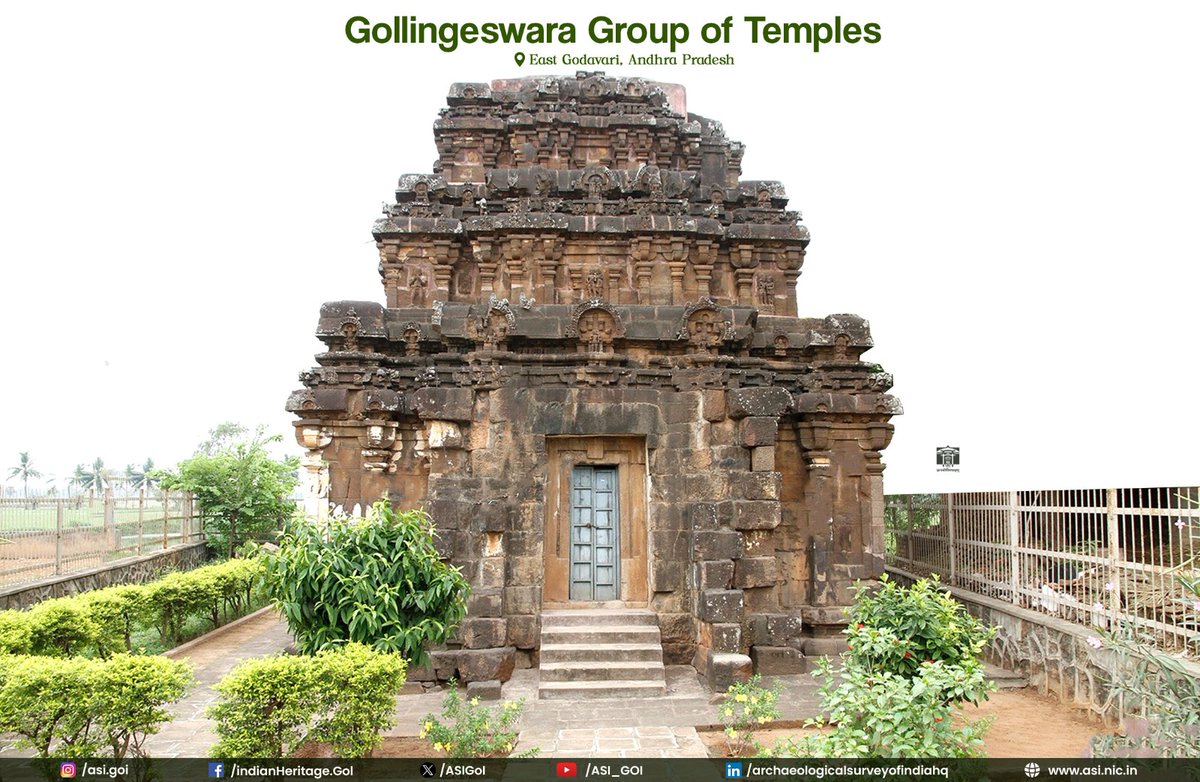
The Gollingeswara Group of Temples at Biccavolu was built by the famous Eastern Chalukya king Gunagavijayaditya III (Birudanka Bhima) during the 9th century CE. The site house six sandstone temples, clustered in two different localities of the village. The first cluster includes the Gollingeswara, Rajarajeswara and Chandrasekhara temples, all west-facing and enclosed within a common compound with a gopuradvara and open porticos. The deity enshrined in the Gollingeswara Temple is known as Vijayasvara Mahadeva - by the name of the donor king. These temples continue to be under worship. (1/2)
3
53
252
10,593
The second cluster consists of the Veerabhadra, Nakkalagudi and Kancharagudi temples, located away from the main village, where only the sanctums survive. Among them, the Gollingeswara Temple is the largest and the richest in architectural richness. It consists of a garbhagriha, antarala, a narrow passage, mukha mandapa, and a later-added mandapa. The sanctum houses a polished granite linga, while the exterior walls feature richly carved koshtas with sculptures influenced by the Kalinga style. The temple contains images of Ardhanarisvara, Vishnu, Bhikshatanamurthy, Mahishasuramardini, Surya, Skanda and Devi. The temples are adorned with numerous sculptures, including Ardhanariswara, Ekapada Dakshinamurti, Bhikshayatana Siva, Surya, Kumara with Kukkuta, Kubera on a human mount, Mahishamardini, Chamunda and Gomata in the Gollingeswara group. The Kancharagudi Temple features sculptures of Vishnu, Nataraja and Surya, along with Ganga and Yamuna figures carved at the base of the doorway and in separate niches. (2/2)
5
33
1,421
A timeless symbol of devotion and architectural grandeur, the Govind Deo Temple in Vrindavan reflects the rich cultural and spiritual legacy of India. Built in red sandstone with remarkable craftsmanship, this iconic monument continues to inspire visitors with its history, heritage and enduring faith.
4
20
89
5,914
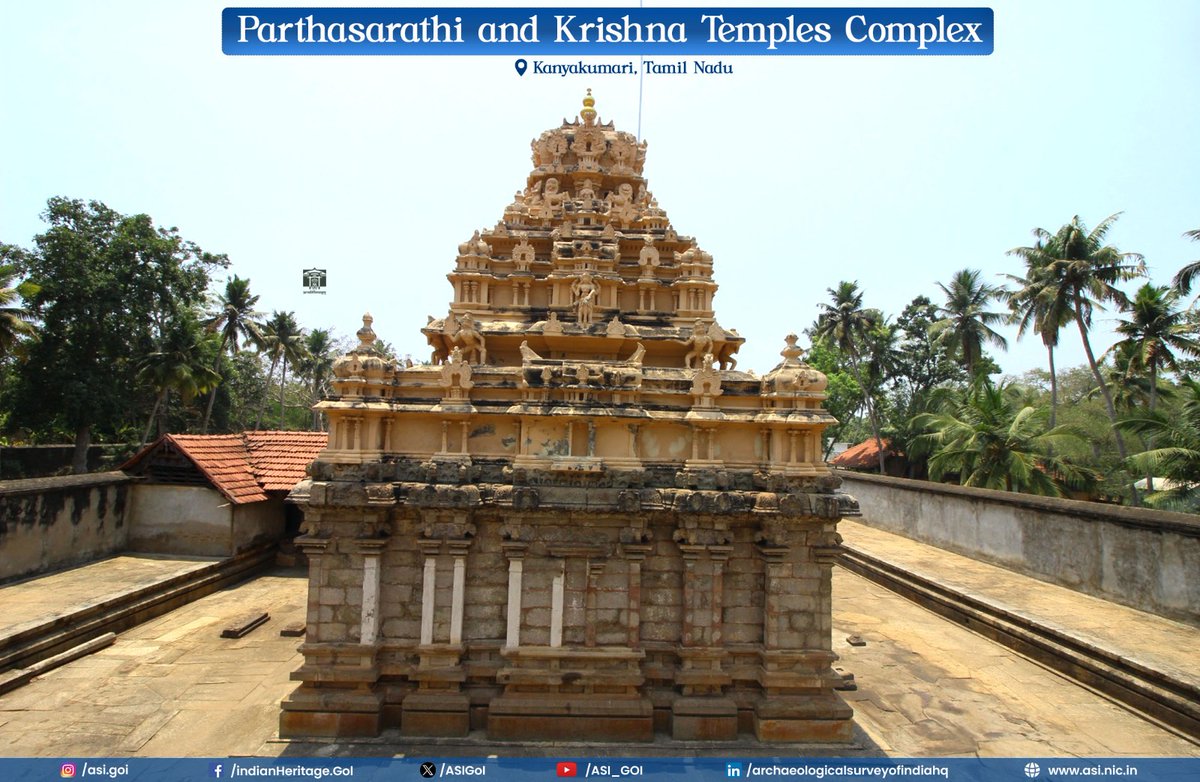
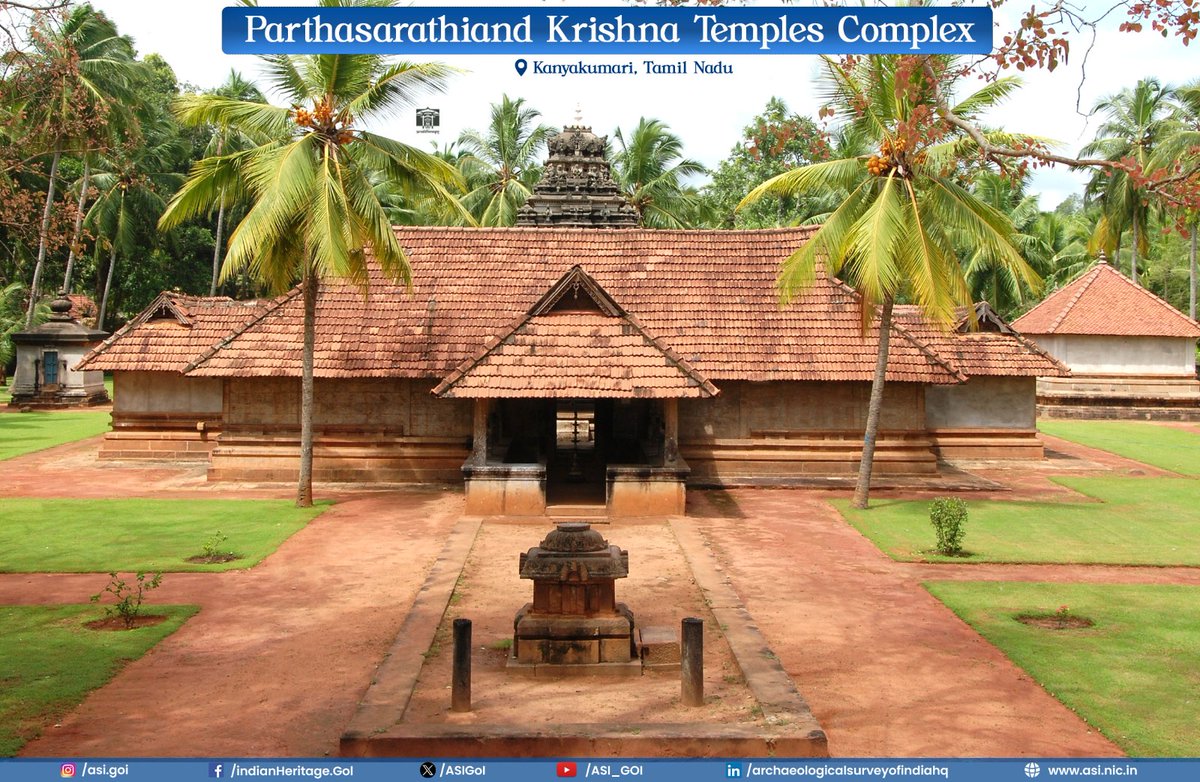
Nestled in Parthivapuram, the Parthasarathi Temple is one of the earliest and finest surviving monuments of the Ay dynasty. Built by Ay king Karunandadakkan in 857 CE, the temple stands as a remarkable testament to a historical architecture. Historical inscriptions record that the king acquired land from the sabha of Minchirai before consecrating the shrine to Lord Vishnu. Designed as a tritala vimana, the west-facing temple features a garbhagriha, pradakshina-patha, mukha mandapa, and a Namaskara Mandapa. Its an elegant blend of granite and brick construction, along with stucco depictions of Narasimha, Brahma, Indra, and Dakshinamurti, makes it an outstanding example of early Kerala temple architecture. Located within the same complex, the Krishna Temple is an exquisite alpavimana in the Dravidian style, dating to the 9th–10th century CE. The east-facing shrine houses a graceful four-armed image of Lord Vishnu and reflects the refined craftsmanship and architectural traditions of the period. Together, these temples preserve the artistic, architectural, and cultural legacy of the Ay kings, offering a fascinating glimpse into South India’s rich heritage.
10
55
313
9,713
इतिहास को सहेजते हुए भविष्य का निर्माण
विरासत भी, विकास भी: नए भारत का सांस्कृतिक पुनर्जागरण! 🏛️✨ आज का भारत अपनी सदियों पुरानी विरासत को सिर्फ सहेज ही नहीं रहा, बल्कि उसे आधुनिक तकनीक, पर्यटन और वैश्विक कूटनीति से जोड़कर दुनिया के सामने एक नई पहचान दे रहा है। भारतीय पुरातत्व सर्वेक्षण (ASI) के संरक्षण में जहां 3,686 ऐतिहासिक स्मारकों की देखभाल हो रही है, वहीं मार्च, 2026 तक 1.84 लाख स्मारकों और 17.20 लाख बहुमूल्य पुरावशेषों का एक विशाल डिजिटल रिकॉर्ड तैयार कर हमारी जड़ों को हमेशा के लिए सुरक्षित कर दिया गया है। यह केवल इतिहास का संरक्षण नहीं, बल्कि गर्व से मुस्कुराते नए भारत के सांस्कृतिक पुनरुत्थान की महागाथा है! 🇮🇳💫
3
22
3,505
Experience the essence of Varanasi at the Virtual Experiential Museum (VEM), located within the historic Man Mahal Observatory. Through immersive digital technologies, the museum showcases the city’s rich cultural heritage - from its sacred ghats, classical music, and sari-weaving traditions to Ram Leela performances, literary legacy, and vibrant streetscapes. (1/2)
2
15
75
7,273
A major attraction is the projection-mapped depiction of the sacred story of the descent of the Ganga, offering visitors a captivating blend of heritage and technology. (2/2)
5
14
1,585
Karli Mahadev Temple is a simple yet significant shrine dedicated to Shiva. The temple comprises a pancha-ratha sanctum crowned by a massive curvilinear shikhara and an antarala projection with a pyramidal roof. It is datable to around the 12th–13th century CE. The temple was built by Somal Devi, the wife of Chindak Nagvanshi King Someshwar Dev, and is situated beside a large lake. One of its notable features is the impressive sandstone Shiva-linga housed within the shrine. The temple’s carvings closely resemble those seen at the renowned Battisa Temple, Barsur, reflecting the artistic traditions of the region.
10
39
302
9,231
Archaeological Survey of India reposted
Director, Dept of Archaeology, Bagan reviewed ongoing restoration works Monuments 1670,1391,233 62 & 123 and expressed satisfaction with the progress and handed over another appreciation letter for @ASIGoI from the local community.
2
8
22
2,237
The Archaeological Survey of India pays heartfelt condolences on the sad demise of Sh. C. Babu Rajeev, IAS, who led the organisation as Director General (2004-2007).
1
4
22
3,952
A refined expression of form and symbolism, this standing sculpture of the Varaha incarnation of Vishnu presents a striking composition. The four-armed deity, with a boar-face, holds Prithivi—the goddess earth personified as a small female figure—in his upper left hand, his gaze directed towards her. His lower right hand holds the hand of the standing Bhumidevi. He carries a chakra in his upper right hand and a conch-shell in his lower left hand. Firmly grounded, his left leg treads upon the coils of Adisesa, completing a composition that conveys both strength and composure in its detailed portrayal.
3
109
551
10,016
The excavations at Malhar, carried out between 2009 and 2012, aimed to understand the site's cultural sequence, structural activities and the antiquity of its fortification. The excavations revealed a long cultural sequence from the Pre-Mauryan period to the Later Gupta period, represented by five major occupational phases. The earliest Pre-Mauryan phase was characterized by Black-and-Red Ware, Red Ware, Dull Red Ware and Red Slipped Ware, with no structural remains, indicating an early habitation primarily associated with ceramic activity. The Mauryan–Sunga phase witnessed the emergence of stone and burnt-brick structures, rectangular houses and circular granaries. Important discoveries included decorated stone plaques, polished stone objects, terracotta sealings with Brahmi legends, copper coins, beads, rice grains and an iron tripod. (1/2) @narendramodi @MinOfCultureGoI @gssjodhpur @Rao_InderjitS @tourismgoi @GoChhattisgarh @MIB_India @PIB_India @incredibleindia @DDNewslive
1
14
52
6,216
The Pre-Gupta phase showed extensive settlement expansion with well-planned brick and stone structures, drains, multi-room complexes, a lime-plastered square kunda and a Satavahana brick structure. Finds included terracotta figurines, beads, ivory dice, iron implements, sealings with Brahmi inscriptions, copper coins and a silver coin of Vashishthiputra Pulumavi, indicating trade and administrative connections. The Gupta–Vakataka phase was marked by continued urban development with brick-built rooms, walls and covered drainage systems. Pottery included stamped wares decorated with symbols such as the svastika, crescent moon and floral motifs. Silver seals, terracotta figurines, beads, iron tools, decorated stone plaques, copper coins and Roman silver portrait coins reflect the site's cultural and economic prosperity. The Later Gupta phase was represented by structures built with reused bricks and brickbats, along with Red Ware and Dull Red Ware pottery. Iron objects, terracottas and semi-precious stone beads were also recovered. The excavations also revealed a fortified settlement surrounded by an ancient moat, demonstrating the continuous occupation, urban growth, craft production, trade contacts and political significance of Malhar from the Pre-Mauryan to the Later Gupta period. (2/2)
3
10
1,145