
In the new season of "How To," Julie Beck and Natalie Brennan explore the fraught and always-changing relationship people have with technology—and how the terms of that relationship are being renegotiated.
Subscribe to get the first episode on July 27 theatlantic.com/podcasts/202…
Zohran Mamdani and a series of insurgent leftists think they’ve found a solution to the affordability crisis: “consumer socialism,” @imkahloon writes. It could make everything worse: theatlantic.com/magazine/202…
"One of the more marvelous things about the World Cup is that its 39 days afford you the time to develop unreasonable affections for teams not your own," @SallyJenki writes. theatlantic.com/culture/2026…
These days, “corporate America is more likely to stay silent on anything deemed risky—even, in some cases, celebrating our nation’s founding. Patriotism can still sell in 2026, but not like it used to,” @anniejoyw8 writes: theatlantic.com/ideas/2026/0…
Many literary classics have a way of appealing to our lizard brain while making us ask why we find their stories compelling, @Borisk argues in the Books Briefing. theatlantic.com/newsletters/…
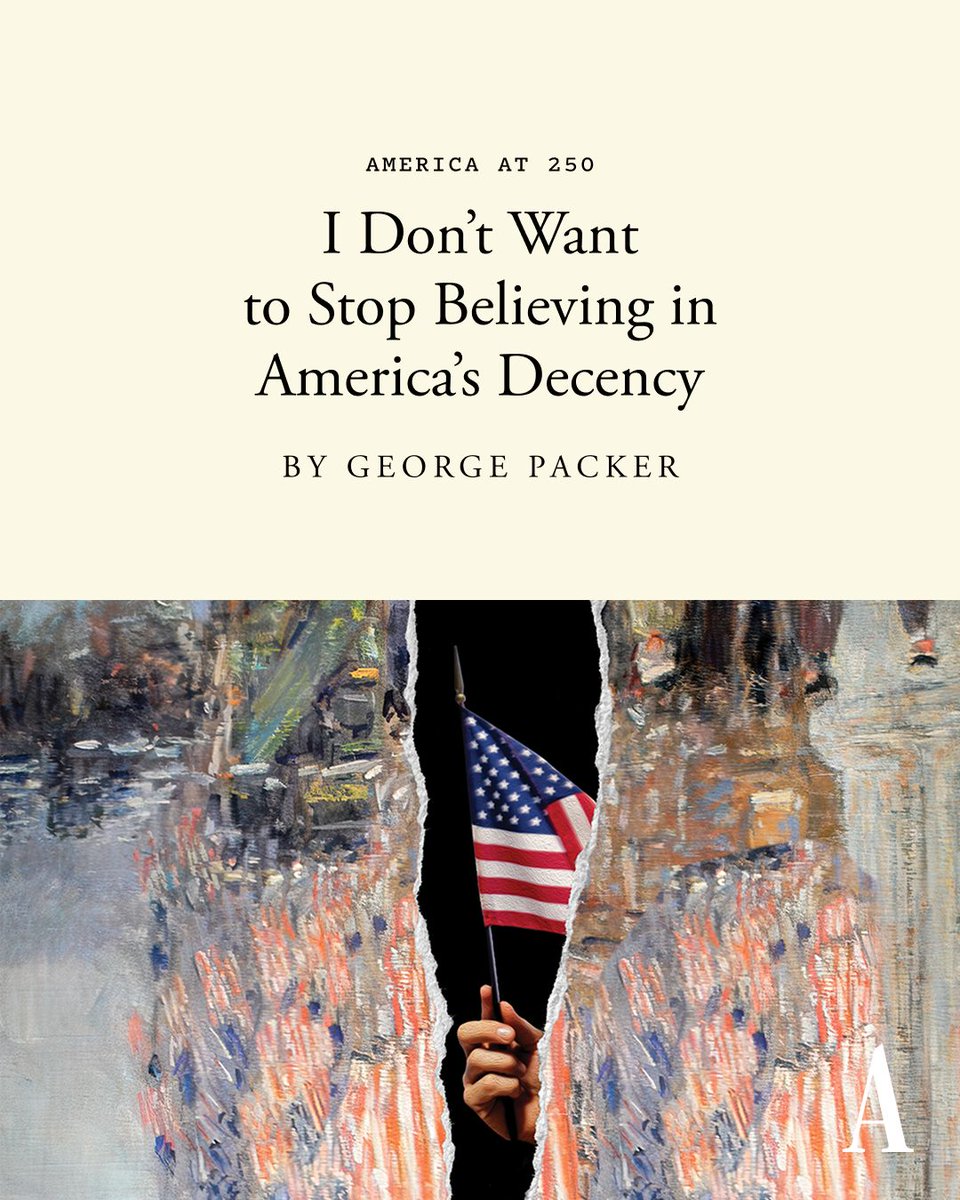
The highest reaches of government are championing the idea that God favors Americans, Jim Rasenberger writes. He explores how John Adams’s warning against this belief could help the country address its predicament in 2026: theatlantic.com/ideas/2026/0…
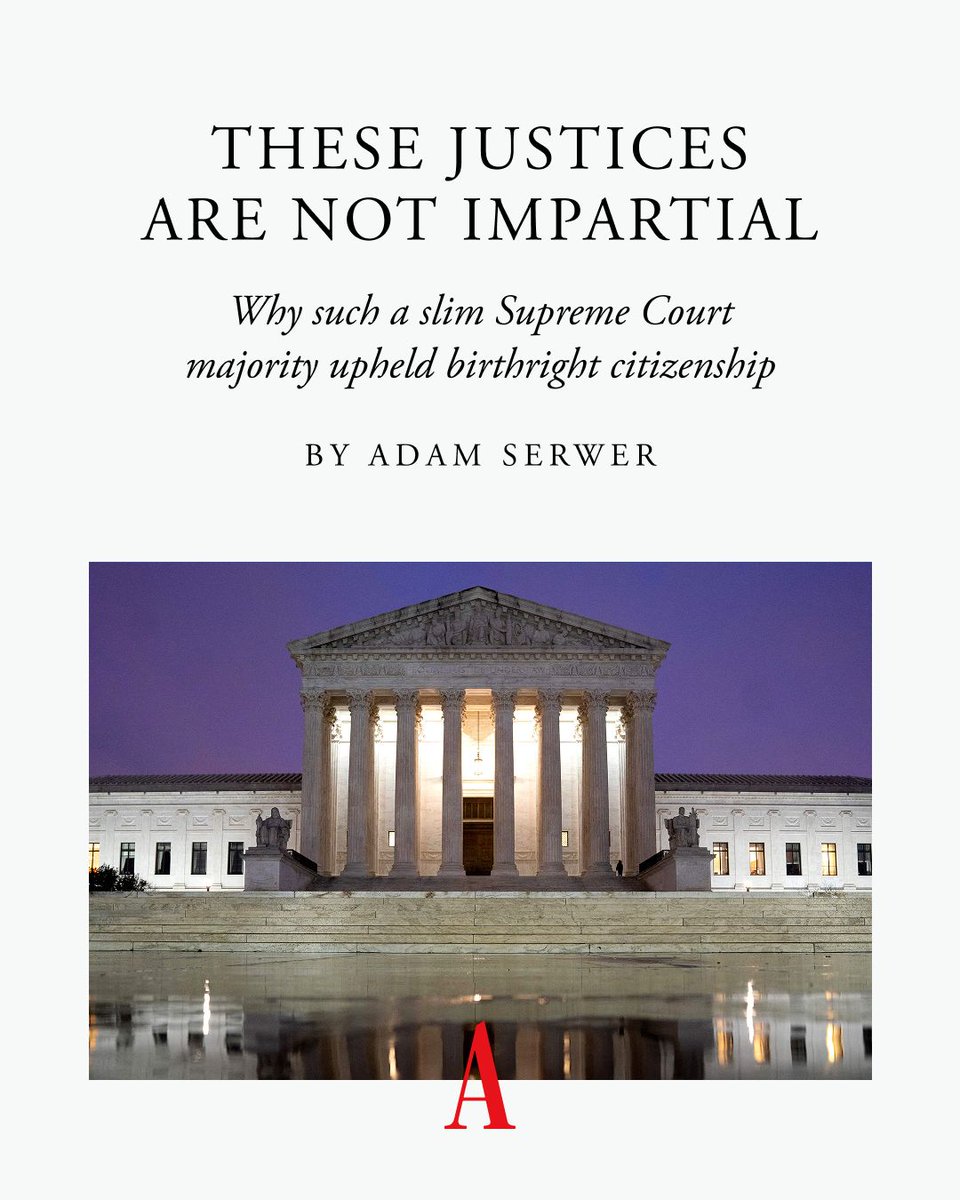
By re-centering executive power in the president, the Supreme Court’s decision in Trump v. Slaughter “portends a coming age of diminished administrative power—a necessary corrective to our age of undemocratic bureaucracy," Philip Hamburger argues. theatlantic.com/ideas/2026/0…
Doug Jones’s campaign for governor has a long-shot logic, Howell Raines reports. He spoke with “Alabama’s proven upset artist” about how the state is changing: theatlantic.com/politics/202…
President Trump is running out of time to change the country’s voting policies ahead of the midterms, because the courts, Congress, and the Constitution seem to keep getting in the way, @ToluseO reports. theatlantic.com/politics/202…
Revisiting our history can “help America remember what it once was, help us better understand who we are today, and point us to a united shared future,” Lonnie G. Bunch III argues. He writes about creating the Smithsonian’s “American Aspirations” exhibit. theatlantic.com/ideas/2026/0…
Ten years ago, J. D. Vance called Trump “cultural heroin” in The Atlantic: “To every complex problem, he promises a simple solution … He never offers details for how these plans will work, because he can’t," Vance wrote of Trump.
Read the piece: theatlantic.com/politics/arc…
"Once you give in to spending the day inside—with a good movie or the right book, or just dancing around the kitchen with your loved ones—you’ll find that beauty exists there," @IsabelFattal writes. In The Wonder Reader, she explores finding joy at home: theatlantic.com/newsletters/…
In Lahore, only a small percentage of the population has access to air-conditioning. In 2024, @andersen visited the ER of Pakistan’s largest hospital and reported on the effects of extreme heat affecting patients: theatlantic.com/science/arch…
Roger Deakin’s book, “Waterlog: A Swimmer’s Journey Through Britain,” galvanized the practice of wild swimming in rivers, ponds, and lakes. In 2021, Anelise Chen explored how the book is also a manifesto on the idea that water is inherently political. theatlantic.com/culture/arch…
“You lose the news, /
you shake the hour of seated transit off /
and stand quiet with whatever you’ve seen”
Read “From Idaho B Roll”: A poem by Brian Blanchfield: theatlantic.com/magazine/202…
Multiple studies show a mysterious health benefit to ice cream—but scientists don’t want to talk about it, @davidmjohns reported in 2023. theatlantic.com/magazine/arc…