
Weg mit dem Mist

Gebt den doch erst mal einen Kaufmanns Laden mit Spielgeld. Der hat doch total den Überblick verloren. Mit so vielen Nullen kennt der sich doch garnicht aus.Heute fehlen 10 Millionen und Morgen 200 Milliarden der Wahnsinn. Und er noch von der SPD die mit Geld nie umgehen können.

„Der Tor der Woche“ von Waldi Hartmann @hartammann ist Luisa Neubauer! „In Erfurt hält sie ein Schild hoch mit der Aufschrift: Eine wehrhafte Demokratie fällt nicht vom Himmel. Allerdings regnet es auch kein Hirn für 30-jährige Wohlstandsverwahrloste aus reichem Elternhaus.“
33
235
1,694
25,748

Ich registriere es nur noch.. Vor kurzem sagte mir jemand, dass man mit Empathie heute nicht mehr weit kommt. Familie und die engsten Freunde, die dürfen sie haben. Der Rest ist mir mittlerweile egal. Sollen sie sich alle gegenseitig ihre Schädel einkloppen. Nicht mein Problem. Hauptsache ich hab meinen Frieden.

Der ÖRR informiert nicht nur "mit Haltung", sondern er unterrichtet die Bürgenden über die Haltung.
Selbstverständlich über die Haltung der Regierenden, was sonst?
1

Kommt den sozialistischen Anhängerinnen und Anhängern nie in den Sinn, dass das allzu leichtfertige Hantieren mit dem #Faschismus-Begriff in einem Zusammenhang stehen könnten mit dem Abwenden breiter Bevölkerungsschichten von den #Altparteien-Kräften?

„Offensichtlich ist für die jeder ein Faschist, der nicht Ihrer Meinung ist“ to.welt.de/XWlu3yf


Kristin Reinert retweeted

Die Bluse hat sie wohl von der SED Oma geerbt? Die Ideologie gleich mit, denn ihr trotziges Gesicht zeigt klar, das sie und nur sie, den vollen Durchblick hat.
Ansonsten eher so die Beamtin, Typ kleine Tippse und das sind die Schlimmsten. Von was lebt sie eigentlich? Ich tippe mal auf NGO Kohle, oder Bürgergeld.
Gott bewahre uns davor, das solche Rache - Weiber an die Macht kommen.

160
127
1,225
19,980
otto fischer retweeted

😱 Mailand, heute:
Ein 55-jähriger Mann sitzt ganz normal mit Freunden draußen vor einer Bar. Er trinkt einfach nur einen Kaffee. Kein Streit. Keine Provokation.
Da kommt ein 22-jähriger Gambier auf ihn zu – einen Fremden – und sticht ihn 20 Mal nieder.
Wunderbarerweise hat er überlebt.
Als die Polizei den Täter festnahm, sagte er eiskalt:
„Ich hatte Spaß. Sobald ich rauskomme, mache ich es wieder.“
Das ist das Europa, das uns durch Massenmigration beschert wurde.
Das ist das Europa, in dem Ursula von der Leyen uns leben lassen will.
Ein Europa, in dem du nicht mal mehr in Ruhe einen Kaffee trinken kannst, ohne dass dir jemand das Messer in den Rücken rammt.
Wir haben pures Böses in unsere Länder geholt. Viele werden sich nie ändern. Viele wollen sich nie anpassen.
Die einzige Lösung ist klar:
Kriminelle und nicht integrierbare Menschen sofort abschieben – und keinen weiteren mehr hereinlassen.
Wer das noch immer nicht begreift, der will es nicht begreifen.
#Mailand #Migrationskrise #Sicherheit #Europa #WachAuf
Was muss noch passieren, bis die Politik endlich handelt? 👇

10
40
82
938

🔴 JAN VAN AKEN SPALTET GANZ DEUTSCHLAND MIT NAZI-VERGLEICHEN‼️ youtu.be/0_BGd1UZxuM?si=vexf… via @YouTube

Akwa Ugo Na Okija, Esq retweeted

18h
“Harri, why are you always posting about your culture”
This is a Harvard and MIT-trained economist, Nigeria’s ex Minister of Finance, 25 year career at the World Bank - rising to an MD, and the current Director-General of the World Trade Organization, dancing with Igbo masquerades in front of her office in Geneva, Switzerland.

Enjoy some lovely videos of Nigerian masquerade and dancers at the @wto Open Day.
41
552
2,575
88,709

Das kann man nur mit Selbstironie erklären. Dieter Nuhr müsste sich für so einen frauen- & grünenfeindlichen Sketch wieder im Ziegenstall verstecken.

Da glaubt man, mit 1 Billion Schulden müsste das jeder Drittklässler hinbekommen. Aber unsere Regierung kommt mit 1Billion immernoch nicht hin. Langsam wird es wirklich lächerlich!!!

MİT başkanı İbrahim Kalın:
Modern zihinlere Allah'a kul olmak biraz ağır bir ifade gibi geliyor. Körü körüne bağlanmak, kul köle olmak gibi anlaşılıyor. Oysa Allah'a kul olmak en büyük özgürlüktür çünkü bu O'nun dışında hiçbir güce, makama, kişiye kul köle olmamak demektir.
7
51
233
3,204
Agent 4816 in 🤡🌍 retweeted

Habeck arbeitet jetzt für nen dänischen Immobilienverwalter der in Deutschland wachsen möchte.
Mit dem Grüne-Stadtregierungs-Netzwerk kann er sicher helfen ordentlich Staatsknete für die abzugreifen.
Alles daran ist schön.
21
56
600
6,715
Millie Marconi retweeted

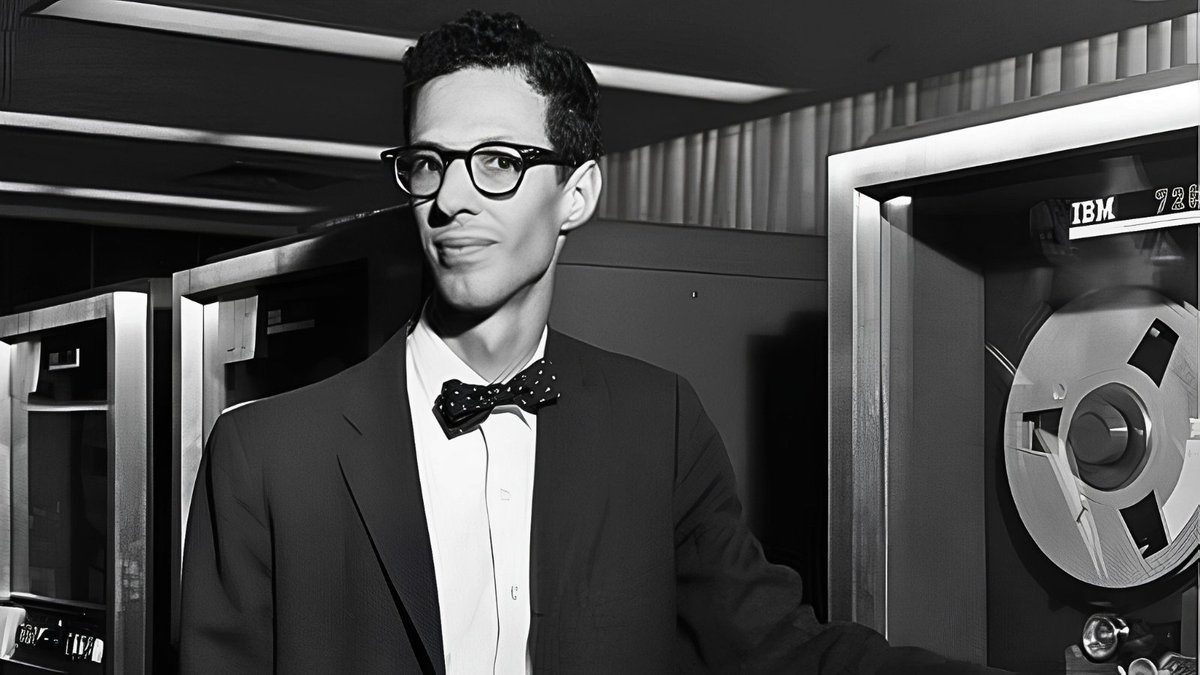
An MIT scientist got sick of watching people dig through his own private files on a shared computer in 1961, so he invented the password to stop it, and now you type his invention fifty times a day without knowing his name.
His name is Fernando Corbató.
The problem he was solving had nothing to do with security in the way we think about it today.
In the early 1960s, computers were the size of rooms and cost more than most universities could afford. MIT owned one.
So instead of buying more machines, Corbató and his team built something called CTSS, the Compatible Time-Sharing System.
It let several people use the same computer at the same time, each person getting a small slice of the machine's attention in rapid rotation, fast enough that it felt like they each had their own private computer.
This idea alone was massive. Before CTSS, one person used a computer at a time, fed it a stack of punch cards, and waited hours for a result.
Corbató's system meant multiple researchers could sit at different terminals and work simultaneously.
This is the exact concept every cloud server, every shared computer, every device running Windows or macOS today is quietly built on top of.
But sharing one machine created a new problem nobody had solved yet. Everyone's files sat in the same place.
Anyone could open anyone else's documents, research notes, or unfinished work. Corbató found this personally irritating. Not because of hackers or spies.
Because his own colleagues kept stumbling into each other's files by accident, and sometimes on purpose.
His fix was simple.
Give every user a private login name and a secret word only they knew. Type it correctly, and the system unlocked your own personal space.
Get it wrong, and you saw nothing. The password was never designed to stop a criminal mastermind.
It was designed to stop a coworker from opening the wrong folder in a shared university computer lab.
That small fix became the seed of an idea that now governs almost everything you do online. Every bank login, every email account, every app on your phone still runs on the exact same logic Corbató built in 1961.
Type the secret word, prove you are who you say you are, get access to what belongs to you.
The strange part of this story is what Corbató said decades later, long after the password had become a global standard. He called it a nightmare.
He watched people forget passwords, reuse them across accounts, write them on sticky notes, and get hacked because the system he built for a small MIT lab was never meant to protect a planet full of strangers with bad habits and worse memory.
He died in 2019. By then the average person on earth was juggling dozens of passwords across dozens of accounts, all tracing back to one annoyed scientist who just wanted his files left alone.
Nobody thinks about him when they type a password. Most people don't think about the password at all.
It has become so basic, so invisible, so obviously necessary that it stopped looking like an invention a long time ago.
But someone had to build it first. Someone had to be annoyed enough, in exactly the right decade, on exactly the right machine, to solve a small problem that turned into the most repeated action in human history.
1
12
19
1,930

19s
Das ganze System ist Kernbehindert. Es ist völlig sinnfrei den Einzelhandel dann zu öffnen wenn die Menschen in der Arbeit sind. Das ist fast so dumm wie den Schulstart gemeinsam mit dem Arbeitszeitbeginn zu veranstalten oder immer die selbe Anzahl Frauen/Männer WCs zu bauen .

Wäre ich so verrückt, Geld für den Haken zu bezahlen, würde bei mir so etwa „ab 2011“ stehen.
Weil Elon kein neues Feature einrichtete, sondern das alte (echte) Verifizierungssystem einfach ummodelte.
Was jeder mit Beitritt 2010 wissen sollte.


22s
Pushkin z.B. war der Nachfahre eines afrikanischen Prinzen, der als Geisel an den Hof des Zaren kam.
Seine Geliebten haben ihn oft wg. seiner dunklen Hautfarbe mit Kosenamen belegt. Jetzt erklär mal einem Russen, dass Pushkin keiner der ihren gewesen sein soll.